Key concept:Falling in love is much more than you think.
HI ,
I have been exploring the subject of love once again. I do this every so often just to update the ground I stand on internally. This time I started looking at some of the many influences on my perspectives over the years. I feel truth in so many different views of love. Today I narrowed my focus down to the initial falling in love phase of the cycle of love. Let the roller coaster
begin!
The Feeling
We’ve all felt it: the racing heart, the sudden certainty that this person is different, the world tilting sideways. Butterflies turn into obsession, and the ordinary becomes poetry. Why? For centuries, the greatest minds have tried to answer that question. Their answers don’t cancel each other out—they layer like a rich painting.
Science gives us the canvas and the paint; mystics add the inspiration; psychologists show us the hidden brushstrokes; philosophers hand us the frame so the picture doesn’t fall apart. Let me be more specific.
The Body’s Ancient Strategy
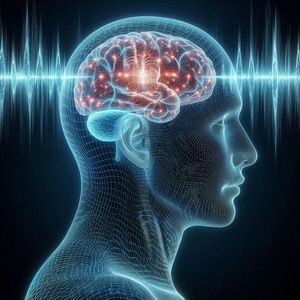
At the most basic level, falling in love is your brain executing a survival plan millions of years in the making. The brain chemistry dance begins. Dopamine floods you with euphoria and laser-focus (“I can’t stop thinking about them”). Norepinephrine keeps your palms sweaty and your sleep gone to push you into action. Later, oxytocin and vasopressin create calm attachment—the “I’d do anything for you”
bond.
Evolutionarily, this isn’t random romance; it’s a commitment device. Human babies are born ridiculously helpless. Two parents (plus grandparents, aunts, and the whole “village”) dramatically raise the odds that the child survives long enough to have children of their own. That’s why love feels like destiny: your ancient software is shouting, “Stay together and raise this
tiny baby!”
Yet the system is flexible. In some cultures men have multiple wives and children are often raised with extended family help. The same brain chemistry still sparks love—it just expresses itself differently depending on economics, kinship rules, and survival needs. Biology sets the stage; culture writes the script.
The Mind’s Mirror
Sigmund Freud saw the whole thing as a clever illusion. Falling in love, he said, is really you recreating your first feeling attachment —mom or dad—projected onto the person your are falling for.. You overvalue the person because your unconscious is busy replaying childhood longing. The ecstasy is real, but so is the eventual
crash when reality returns.
Carl Jung flipped Freud’s idea upside down and made it hopeful. That sudden “It’s them!” feeling. It’s your soul-image—your unexpressed hidden side—leaping out of your unconscious. The person you fall for isn’t just attractive; they carry the missing half of your psyche. If you’re brave enough to pull the projection back and integrate it, love becomes the fastest road to becoming your full, mature
self.
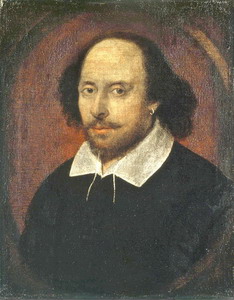
William Shakespeare, watching the same drama four centuries earlier, simply staged it as glorious madness. “Love looks not with the eyes, but with the mind,” he wrote, “and therefore is winged Cupid painted blind.” One minute lovers are writing sonnets to eternal beauty; the next they’re stabbing each other in jealousy or drinking poison in a tomb. Shakespeare never moralized. He just showed us that love is the
force that makes humans both ridiculous and magnificent at the same time.
The Soul’s Wild Invitation
Rumi, the 13th-century Sufi poet, would laugh at anyone trying to be “sensible” about love. “Close your eyes,” he says, “fall in love, stay there.” For him, romantic love is the quickest shortcut to God. The beloved becomes a mirror of the Divine. Every veil of ego falls away in the fire of longing, and suddenly you remember you were never separate from the universe.
Alan Watts, channeling Zen and Taoism, called it “divine madness.” Falling in love is the sane thing to do precisely because it’s insane. Life itself is a constant fall into the unknown. Why pretend we’re in control anywhere else? Surrendering to another person is practice for surrendering to existence.
Lao Tzu, author of the Tao Te Ching, would nod gently but add a caution: true love flows like water—effortless, humble, never grasping. The greatest love looks almost indifferent because it doesn’t need to own or control. Desire that becomes desperate disrupts the natural harmony.
And the Buddha? He offers the clearest warning light. Passionate “falling” is often just craving wearing a pretty dress. It promises happiness outside yourself and therefore guarantees suffering when the other person changes (which they will). The solution isn’t to avoid love—it’s to transform it into pure loving-kindness: “I wish you to be happy” without needing them to complete me. Hold the person lightly, and
love becomes freedom instead of chains.
The Philosophers’ Steadying Hand
The Stoics, living in ancient Rome and Greece, watched the same fireworks and reached for a fire extinguisher. Passionate love is a dangerous “excessive impulse.” They advised loving deeply but with detachment: remember that everyone you love is temporary, like fruit in season. Enjoy the sweetness fully, but don’t let the loss destroy your inner peace.
Friedrich Nietzsche took it further. He saw a hidden purposefulness in the madness. Yet he mocked most romantic love as weak worship—an illusion that makes us smaller. Real love, for Nietzsche, grows from friendship, strength, and shared self-overcoming. Stop idealizing the other person; become worthy of each other instead.
Jordan Peterson brings the ancient wisdom into modern life with blunt practicality. The initial fall is easy and chaotic. The real test is what happens next. Romance dies without weekly dates, honest conversation, regular intimacy, and a shared higher purpose. Marriage, he says, is “voluntarily handcuffing yourself to reality.” The butterflies are the spark; responsibility is the wood you keep adding to the fire
for decades.
Putting It All Together
So what do we do with this picture? Science says: your brain is doing exactly what it evolved to do—pull you into a bond that once helped tiny humans survive. Psychology says: look in the mirror. Who are you projecting? What part of yourself is this person inviting you to reclaim? Literature and the mystics say: surrender. Let the madness happen. It’s the closest most of us ever get to tasting the divine. The
philosophers say: don’t lose yourself completely. Temper the fire with wisdom, detachment, and daily effort.
The synthesis is this: falling in love is simultaneously a biological trick, a psychological mirror, a spiritual doorway, and a moral gymnasium. It can regress you, expand you, enlighten you, or destroy you—sometimes all in the same week.
Here’s the practical takeaway most of these voices quietly agree on:
Feel the fall fully—don’t judge it
or make it wrong.
After the honeymoon chemicals fade, choose the relationship every single day.
Keep one foot in detachment: love them without needing them.
Use the relationship as a mirror. Whatever it reveals about your fears, needs, or unfinished soul-work is the real gift.
In the end, love refuses to be reduced to any single explanation. That may be its
greatest power. It drags us—willing or not—into the full spectrum of being human: vulnerable and strong, selfish and generous, ordinary and divine all at once.
So the next time your heart does that ridiculous flip, pause for a second and smile. You’re not just falling for a person. You’re stepping into a conversation that’s been going on for thousands of years—between your ancient brain, your hidden soul, the poets, the saints, and every wise person who ever looked at the stars and wondered why we do this crazy, beautiful thing.
What part of the picture speaks loudest to you right now? The science, the surrender, the responsibility, or the gentle letting-go? The answer might just tell you exactly what your next step in love should be.
Take care,
David
Ellen
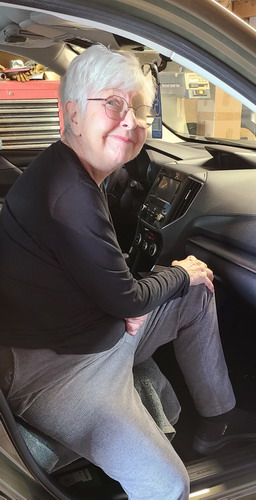
We reached a milestone the last two days. We were able to roll Ellen out to the garage in her wheelchair and help her get up into the car. She has not gone anywhere since before Christmas other than to the hospital and rehab facility in an ambulance and medical transport. Today we are going to try to actually go somewhere, to the new Elliott's health food store that just opened up in Orangevale on
Friday.
Coffee and tea reduce dementia
Tracking 131,000 people for 43 years has shown that caffeine from beverages reduces the incidence of dementia by 14 to 22%. The optimal level of caffeine showed up as 300mg per day, or about 2-3 cups of coffee.
"Life is a mirror of us. Our attention is drawn to reflections of ourselves. Attraction or negative judgments are reflections of our feelings of ourselves.
What we see outside ourselves is only a reflection of how we experience ourselves on a feeling level inside."
~David DeLapp
_____________________________________
How much exercise to help the brain?
We know that exercise is vital to keep our brain working right, but how much? New research is saying that at least 10 minutes a day of activity that involves a speed of at least 40 steps per minute. Frequent 10 minute bouts per day are better than one, and several short bouts are better than longer stretches of time once a day.
"All judgments are self judgments. We judge the actions of others because we feel the motivations and feelings behind the actions in ourselves."
~David DeLapp
________________________________________
Stopping GLP-1 drugs
We now know that when you stop taking your GLP-1 drugs the weight you lost quickly comes back. But now doctors are seeing that heart attacks, strokes, and even death increase after stopping these drugs.
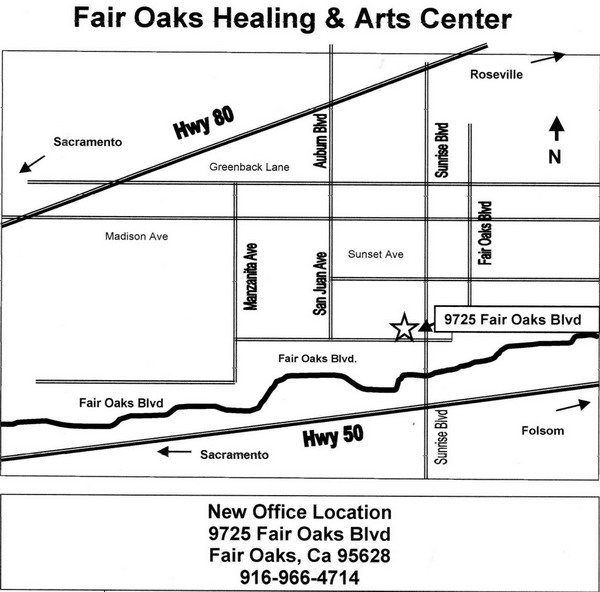
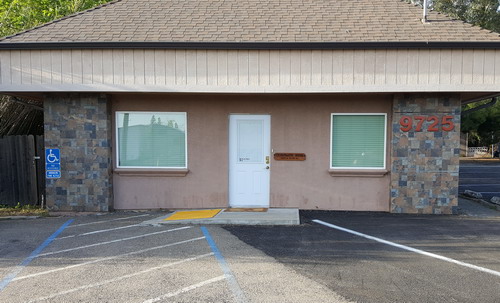
Our address is 9725 Fair Oaks Blvd. suite A Our hours are M, Tu, Th, F 10 to 3:30
Finding our location is very easy. Coming from highway 50 up Sunrise Blvd, you turn left and go up a block. We are on the right hand side - the building just past the Subway Sandwich shop. If you are coming down Sunrise from the Mall area then just turn right on Fair Oaks Blvd and up a block on the right.
If
you are coming from the Roseville area you could come down Sunrise Blvd, but that is a long trek. It is probably shorter time wise to come down Auburn Blvd - San Juan Ave like you have been for the Sunset office, but instead of turning left at Sunset, keep going straight 3 more lights to Fair Oaks Blvd and turn left. Go down 2 lights to New York Ave, go through the intersection, and immediately turn into the turn lane once the center divider ends. We are on the left.
You are free to reprint this article in your newsletter as long as you include the following statement in the same size type and color:
"This article appears courtesy of Fair Oaks Health News, offering natural and healthy solutions for body, mind and soul. For a complimentary subscription, visit http://www.fairoakshealth.com"
Referral doctor for when we are
out of town: Jennifer Webb DC
6216 Main St. suite C1 Orangevale 988-3441
Or Dr. Lily
Dr. Hongtruc Lily Nguyen, DC Carmichael Disc Center
5150 Fair Oaks Blvd, Suite 104
Carmichael, CA 95608 Phone: (916) 680-9989 Fax: (916) 680-9977