Clickhere for an easier to read version of this newsletter
Key concept: managing the hormonal cortisol response to exercise is critical for effective weight loss with exercise.
HI ,
I was researching how to improve my exercise regime to increase fat loss this last week, and I want to share some insights that may challenge what I've heard before. The key isn't just working harder—it's working smarter by understanding how the body mobilizes and burns fat while managing stress hormones.
Understanding Fat Mobilization vs. Fat Oxidation
When we talk about fat loss, we're really discussing two connected processes. First, fat must be released from storage (lipolysis), then it must be burned for energy (oxidation). The hormone system that triggers this release involves the catecholamines—adrenaline and noradrenaline—which your body produces during exercise and emotional arousal.
However, there's a catch: intense or prolonged exercise also elevates cortisol, your primary stress hormone. While some cortisol is normal and even beneficial, excessive levels can actually impair fat loss, promote muscle breakdown, and increase abdominal (visceral)fat storage. It is that visceral fat that is tied to metabolic disease, so we really don't want more of that! The goal is to maximize fat
mobilization while keeping cortisol in check.
The Sweet Spot: Moderate Intensity Exercise
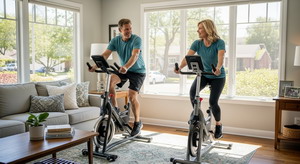
Research consistently shows that moderate-intensity exercise—roughly 60-75% of your maximum heart rate—creates the ideal environment for fat loss. At this intensity, you should be able to hold a conversation but with slightly labored breathing. Think brisk walking, easy jogging, leisurely cycling, or
comfortable swimming. A stationary bike at home is ideal.
Why does this work so well? At moderate intensity, your body relies heavily on fat for fuel. You're producing enough catecholamines to mobilize fat stores, but you're not pushing so hard that your body gets stressed and cortisol spikes significantly. This typically doesn't happen during sessions lasting 30-60 minutes, as cortisol doesn't usually rise substantially until exercise extends beyond 60-90
minutes.
The Distributed Approach: A Game-Changer
Here's where it gets interesting: you don't necessarily need to do all your exercise in one session. Breaking your activity into shorter bouts throughout the day—say, 10 minutes every two hours—can be equally or even more effective than a single 60-minute session. Each brief exercise bout triggers catecholamine release and fat mobilization. Between these sessions, as you go about your day with normal movement
activity, you're in an ideal state to oxidize the mobilized fat. You're also creating multiple small increases in metabolic rate throughout the day rather than just one spike.
This approach offers several advantages: it breaks up sedentary time, helps control blood sugar after meals, produces minimal cortisol elevation, and many people find it easier to sustain. If your schedule allows, try five to six 10-minute sessions spread throughout your waking hours. You'll accumulate 50-60 minutes of fat-mobilizing exercise.
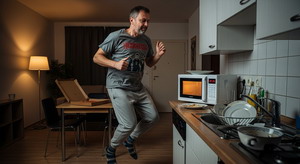
The second key is to burn what you have mobilized with movement to maintain elevated fat burning all day. If you can, be moving around all day. But even if you are having to sit and work, fidgeting while sitting counts as moving. Bounce that knee, tap those hands, sway to the music, anything that gets those muscles to move. That is what burns up that fat.
Where Weight Training Fits
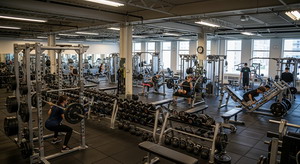
Resistance training deserves special attention because it affects fat loss differently than cardio. Weight training mostly burns up sugar (glycogen) stored in the muscles. While you're not burning much fat during the actual lifting session, weight training creates a powerful after-burn effect that elevates metabolism for 24-48 hours afterward.
More importantly, maintaining or building muscle mass is crucial during fat loss. Muscle tissue is metabolically active—it burns calories at rest and improves insulin sensitivity. Without resistance training, you risk losing muscle along with fat, which ultimately reduces your metabolic rate and makes long-term fat loss harder to maintain.
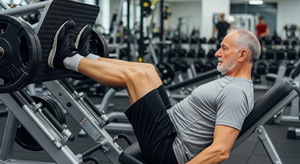
I recommend resistance training two to four times per week, focusing on compound movements like squats, deadlifts, presses, and rows. Keep sessions under 60 minutes to manage cortisol, and ensure adequate rest between sets—particularly for heavy lifts where 2-3 minutes of recovery is appropriate. Remember, muscles only build when your lifting reaches exhaustion and primarily during the return portion of the
lift, not the initial push. So protect your joints by using no more than 65% of your maximum strength, and go for the exhaustion by taking 20 seconds to slowly make your returns. Low and slow wins the game. Here is an article I wrote on this process a few years ago.
You can combine resistance training with cardio in several ways. One effective approach is to lift first for 30-45 minutes, then do 20-30 minutes of moderate cardio. The used-up muscle sugar from lifting means your cardio session taps into fat burning more quickly. Just keep the total session under 75 minutes to avoid excessive cortisol elevation. This is where I am making a shift. I have always done my cardio
first to warm up before doing my lifting.
Strategic Use of High-Intensity Intervals
What about HIIT—those intense, breathless intervals you've heard so much about? High-intensity interval training certainly has its place, but it comes with trade-offs. A 30-60 second all-out effort triggers a massive catecholamine spike and mobilizes fat effectively, but it also produces a significant cortisol response.
If you're going to use HIIT, do it strategically. One or two brief bursts in the morning can create a powerful lipolytic stimulus without excessive stress. The key is pairing these intense efforts with lower-intensity movement throughout the rest of your day, providing the aerobic environment needed to actually burn the released fatty acids. Here is a simple HIIT protocol for seniors.
Avoid multiple HIIT sessions daily or combining HIIT with other major stressors. Your body can only handle so much stress before the cortisol burden begins working against your goals.
The Emotional Connection
Here's something fascinating: emotional arousal—fear, excitement, even falling in love—triggers the same catecholamine response as exercise, causing fat mobilization. However, without the physical activity component, those mobilized fatty acids often aren't burned. Worse, emotional stress typically produces substantial cortisol alongside the catecholamines. This is why chronic psychological stress can sabotage
fat loss efforts despite technically mobilizing fat. The cortisol elevation, combined with a lack of physical activity to burn the mobilized fat, creates the metabolic environment that leads to fat redistribution to the abdominal area. That is a nice way of saying that stress makes your fat move from where you want it to where you don't want it.
Practical Recommendations
Foundation: Resistance training 2-4 times per week, 45-60 minutes per session, focusing on compound movements with adequate rest and cardio after the weight training.
Daily Activity: Either one 30-60 minute moderate-intensity cardio session, or
distributed 10-minute activity bouts every 2 hours throughout the day. Choose whichever fits your lifestyle and preferences better.
Optional Enhancement: One or two brief high-intensity efforts (30-60 seconds) in the morning, followed by lower-intensity activity throughout the day. Here are some examples you can use at home. link
Recovery: At least one complete rest day per week, and never combine excessive training volume with other major life stressors without adequate recovery.
Remember, consistency matters more than intensity. A
sustainable program you can maintain for months will always outperform an aggressive approach that leads to burnout, injury, or excessive stress.
The Bottom Line
Effective fat loss isn't about punishing workouts or extreme intensity. It's about creating the right physiological environment: sufficient stimulus to mobilize fat, adequate activity to oxidize (burn) it, and careful management of stress hormones that can undermine your efforts.
Listen to your body, prioritize recovery, and remember that sustainable fat loss is a
marathon, not a sprint.
Take care,
David
Ellen
I took Ellen out for brunch at our new favorite place to eat, and it is right next door to the office! We went to the Gluten Off Bakery (website) The decor inside is beautiful and totally relaxing. Ellen had avocado toast (on gluten free bread of course) while I had a slice of cherry
tart. We highly recommend this spot, both for the joy of gluten free food we can eat and for the lovely ambiance.
Which heat therapy is best?
Hot tubs, saunas, and infrared therapy all help your body to improve your cardiovascular system and live longer, but which is best? The test has finally been done, and the winner is hot tubs as 105 degrees for 45 minutes came out on top. Check out the details!
"Life is a moving target; success requires constant adaptation."
~David DeLapp
_____________________________________
New drug for presbyopia (old eyes)
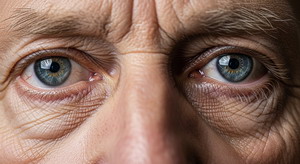
A new eyedrop has been developed that so far does not seem to have any negative side effects. 30,000 treatment days have been conducted in humans without side effects. It works by making your pupils constrict, thus improving near vision focus.
"A win without honor is just another type of loss. Anything gained by cheating or lying means you have sacrificed being in truth with yourself in order to win. This is a greater loss."
~David DeLapp
________________________________________
Coffee actually improves irregular heartbeats.
Contrary to common medical wisdom, coffee appears to decrease problems with irregular heartbeats - atrial fibrillation. Until now doctors have always warned against drinking coffee.
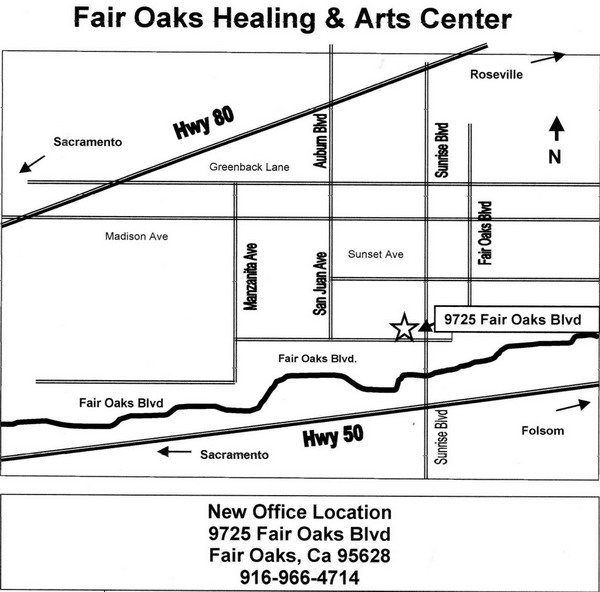
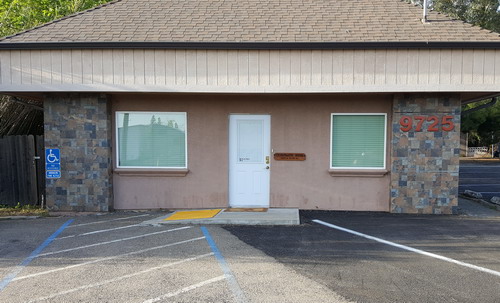
Our address is 9725 Fair Oaks Blvd. suite A Our hours are M, Tu, Th, F 10 to 3:30
Finding our location is very easy. Coming from highway 50 up Sunrise Blvd, you turn left and go up a block. We are on the right hand side - the building just past the Subway Sandwich shop. If you are coming down Sunrise from the Mall area then just turn right on Fair Oaks Blvd and up a block on the right.
If
you are coming from the Roseville area you could come down Sunrise Blvd, but that is a long trek. It is probably shorter time wise to come down Auburn Blvd - San Juan Ave like you have been for the Sunset office, but instead of turning left at Sunset, keep going straight 3 more lights to Fair Oaks Blvd and turn left. Go down 2 lights to New York Ave, go through the intersection, and immediately turn into the turn lane once the center divider ends. We are on the left.
You are free to reprint this article in your newsletter as long as you include the following statement in the same size type and color:
"This article appears courtesy of Fair Oaks Health News, offering natural and healthy solutions for body, mind and soul. For a complimentary subscription, visit http://www.fairoakshealth.com"
Referral doctor for when we are
out of town: Jennifer Webb DC
6216 Main St. suite C1 Orangevale 988-3441
Or Dr. Lily
Dr. Hongtruc Lily Nguyen, DC Carmichael Disc Center
5150 Fair Oaks Blvd, Suite 104
Carmichael, CA 95608 Phone: (916) 680-9989 Fax: (916) 680-9977