| Welcome |
|
July 11, 2014
How to love yourself
Hi ,
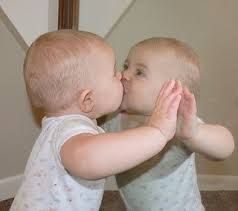
Let's look at a model we all understand - a parent's love for their young child. Suppose this child came down with a high fever and swollen glands. The child is going to feel awful and express their misery to the loving parent. What does the loving parent do in response? Does the parent say, "You love going to the park, so lets go to the park where you can play and feel better"? Or does the parent say "Poor baby, here, have some ice cream and candy, that will make you feel better"? Or does the parent say "Lets put you to bed and keep you warm and see how high your fever is to see if we need to take you to the doctor"?
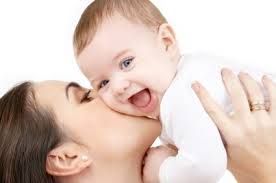
The key perspective here is that a truly loving parent is concerned about the child's welfare more than they are concerned with their unhappiness. Unhappiness happens, it is a part of life. The first point is that loving someone, including yourself, is not about trying to please them and make them happy. Loving is about expending energy and attention on seeing to the welfare and wellbeing of someone.
Point 1: Loving yourself is not about seeking pleasure to cover up unhappiness. Loving yourself is about attending to your welfare and wellbeing.
I see this critical difference missed all the time in our culture. We confuse passion and excitement for love. We even mislabel it from the get go with ideas like "falling in love". No one "falls" into concern for the wellbeing of another, but they do fall into excitement and passion. The problem is we have one word for a whole box full of different feelings. The Greeks understood this and invented three words to quantify love: Eros - erotic passion, Philos - brotherly love, and Agape - divine love. From this perspective, I would look for self-love to be of the agape variety.

Lets go back to the loving parent again as our model. When that child reaches the age of three and wants to copy everything the parent does, does the parent tell the child they are a failure, bad and wrong when they can not do everything perfectly the first time? A good parent does not do this. You do not judge a child as bad because they have not yet developed the skills of an adult. A good parent supports the child by patiently showing them how to do things and gives them appropriate positive feedback as their skill level increases. Negative feedback is only given when what the child is doing will threaten their wellbeing. A good parent also avoids false or inflated positive feedback. Telling a child they are doing a great job when they can clearly see by the results of their actions that they are not doing a great job, only teaches the child to distrust the parent. The child needs reality-based feedback because they are depending on this feedback to help guide them to successful outcomes. Similarly, telling a child how wonderful they are no matter how they behave teaches them that they do not need to even learn any skills in life, but to just become dependent on their parents for their functional survival in life.
These same understandings apply to self-love. How much of the time do we live in self-judgment? We beat ourselves up for failure to be perfect in life. Yet the beatings do nothing to support us becoming more skilled. Negative feedback only inhibits action - it never builds better action. Like the good parent that only uses negative feedback,  when what the child is about to do or is doing will threaten their wellbeing, we need to adopt the same standard. Only criticize yourself in order to inhibit a behavior that will threaten your wellbeing. Then support building alternative behaviors that will achieve the results you desire. when what the child is about to do or is doing will threaten their wellbeing, we need to adopt the same standard. Only criticize yourself in order to inhibit a behavior that will threaten your wellbeing. Then support building alternative behaviors that will achieve the results you desire.
Point 2: Cut out the self-judgment - it can't make you a better person. Instead, recognize what you need to learn and support yourself learning it.
Back to the good parent again. A good parent clearly expresses what they want and expect from the child. Bad parents fall into inane behaviors like expecting the child to be able to read their minds and anticipate the parent's wants and needs. This is how poor boundaries are created. Teaching the child that they are only responsible for responding to clearly expressed information sends them on a path toward developing good boundaries and healthy relationships. The most common example of bad parenting I see is punishing a child for a behavior that was not proscribed ahead of time. To be effective, punishments must be clearly explained and clear limits set well before any behavior takes place.
This whole concept of expectation that others should be able to anticipate what our needs or wants are and its reverse that we should be able to do the same for them is ridiculous. It is based on the illusion that other people feel the same way we do about everything and the even greater illusion that they will see things from our perspective. Our thoughts and feelings are invisible to everyone else and their thoughts and feelings are invisible to us. More importantly, we are the center of our universe and they are the center of their universe. Thus, down deeply no one ever truly can see things from another person's perspective. We can't walk in another person's shoes, we can only imagine things from our perspective and guess what they might be experiencing. So if we want others to know and respond to our thoughts and feelings, we have to express them - out loud - and in a way that they can somewhat understand from inside their world view.
False expectations like these are the basis of poor boundaries. Others will care about our desires when that caring in some way serves them. We live and grow from our participation in relationships with others, so whatever our story is today, participation with that story will serve some people and not others. For example, it is well understood that for every alcoholic there are co-dependents supporting their behaviors. The alcoholic has a story line and the supporters have their own stories they are working out. This is where self-love hits a big challenge. Self-love means you seek out relationships with clear and good boundaries in which the end point of the relationship supports your wellbeing. This can be challenging because sometimes bad relationships are precisely what we need to figure out what we need to let go of to reach for self integrity and peace. Like the child learning new skills, don't negatively judge yourself for what does not work in your life, simply support yourself in learning new and better skills so you can let go of what does not work.
Point 3: Build relationships with good boundaries based on clear expression and no expectations or entitlements.

Wellbeing is an ever-expanding state of being as well as a goal. The more grounding you gain in yourself, the greater your reach becomes. Our hearts need connection and they need self-manifestation. It is not in our nature to be small. We are like plants that love the sunlight so we can grow. The more connected we become, the more nourished we become. As we learn to receive life as it actually is we then have the real ground to stand on from which we are able to create our expression of our selves to the world. It is hard to be ourselves and be successful in our shining out to the world when we are busy maintaining the lies and false expectations we think are real. They simply take up all our time and attention. When you don't hide your unhappiness under pleasure seeking, but instead support yourself learning what really works for you, then you can engage in healthy relationships that support you and your growth.
Point 4: Follow your bliss - pursue your growth as a person. Love yourself enough to give yourself permission to be truly happy by being your true self.

There are probably more points to the process of self-love, but these four are a good start. Loving yourself is a process of expanding you into the world from the inside out. Happiness comes from feeling the strength and freedom to express yourself heart in the world through your creations. Although we can appreciate and enjoy them, happiness does not come from other people, circumstances, or situations. Happiness is the natural consequence of living in self-love. Self-love comes from developing the skills to relate to the worldwide in a balanced, harmonious, dynamic, and effective manner that allows and supports you being your true divine self.
Take care,
David
Ultrasound Physical Therapy
Now available in the office
Tuesday afternoons and Fridays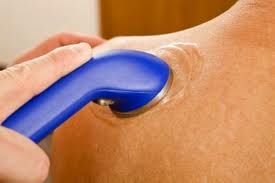
|
H
|
On the Wire
|
Unconscious messages can control our will to resist temptation
- Traditionally it is believed that it takes a strong conscious effort of the will to resist temptation - such as dieting, stopping smoking, etc... But new research is showing that subliminal messages that guide us toward inaction in general can strongly influence us to let go of a behavior without that conscious force of will becoming involved. This information will make it easier to for us to care for ourselves.
Saying No
_____________________________________________
"Love yourself first and everything else falls into line. You really
have to love yourself to get anything done in this world."
-Lucille Ball
__________________________________
Emotional control may be harmful in certain situations
Our ability to change how we look at things is a valuable skill when we are faced with difficult situations we can do nothing about. This keeps us from becoming a crazy person. But when situations that upset us can be changed by our actions, the ability to not be upset by simply looking at things differently is actually harmful psychologically. In these situations we need to employ other skills like problem solving strategies and seeking social support.
"If you aren't good at loving yourself, you will have a difficult time
loving anyone, since you'll resent the time and energy you give another
person that you aren't even giving to yourself."
-Barbara De Angelis
_______________________________
Pups Poop Along North-South Magnetic Lines
11 Things You're Doing That Could Shorten Your Life Since we have a topic of loving yourself in this newsletter, the link at the end of this intro takes you to a list of eleven things to be sure you have covered in caring for yourself. These are not the obvious ones like smoking, drinking, and unprotected sex. This article looks at things you may not have been aware of that have been found to shorten lifespan like being single, having a long commute, or being unemployed.
"Love yourself unconditionally, just as you love those closest to you despite their faults."
-Les Brown
________________________________________________
Our address is 9725 Fair Oaks Blvd.
Finding
the new location is very easy. Coming from highway 50 up Sunrise Blvd,
you turn left and go up a block. We are on the right hand side - the
building just past the Subway Sandwich shop. If you are coming down
Sunrise from the Mall area then just turn right on Fair Oaks Blvd and up
a block on the right.
If you are coming from the Roseville area you could come down Sunrise Blvd, but that is a long trek. It is probably shorter time wise to come down Auburn Blvd - San Juan Ave like you have been for the Sunset
office, but instead of turning left at Sunset, keep going straight 3
more lights to Fair Oaks Blvd and turn left. Go down 2 lights to New York Ave, go through the intersection, and immediately turn into the turn lane once the center divider ends. We are on the left.
You
are free to reprint this article in your newsletter as long as you
include the following statement in the same size type and color:
"This article appears courtesy of Fair Oaks Health News, offering natural and healthy solutions for body, mind and soul. For a complimentary subscription,
visit http://www.fairoakshealth.com"
|
| |
|
_______________
to check on old newsletters
_______________
About Dr. DeLapp
|
|
Dr. DeLapp has been a philosopher, non-force Chiropractor, medical intuitive, and health innovator for over 30 years. He began experimenting with medical intuition in 1972 while studying physics at UC Davis. In addition to physics he designed and completed an individual major in the philosophy and psychology of education. Shortly after he choose to pursue a career in the only truly health oriented profession available at that time, Chiropractic. He graduated with honors in 1981 with his doctorate and opened a private practice.
Since that time he has continued his research into the effects of consciousness and learning on health.
He developed the Biomagnetic Retraining system for correcting movement abnormalities.
Since 1991 he has focused on developing a powerful system for uncovering and assisting the mind-body connection in health and personal growth. The in-depth coaching, guided by the subconscious direction from the body, is called Heartflow and the simpler mind-body retraining for health and unfoldment he has named Gracework. Both are available at Fair Oaks Health.
Fair Oaks Healing
& Arts Center
Staff
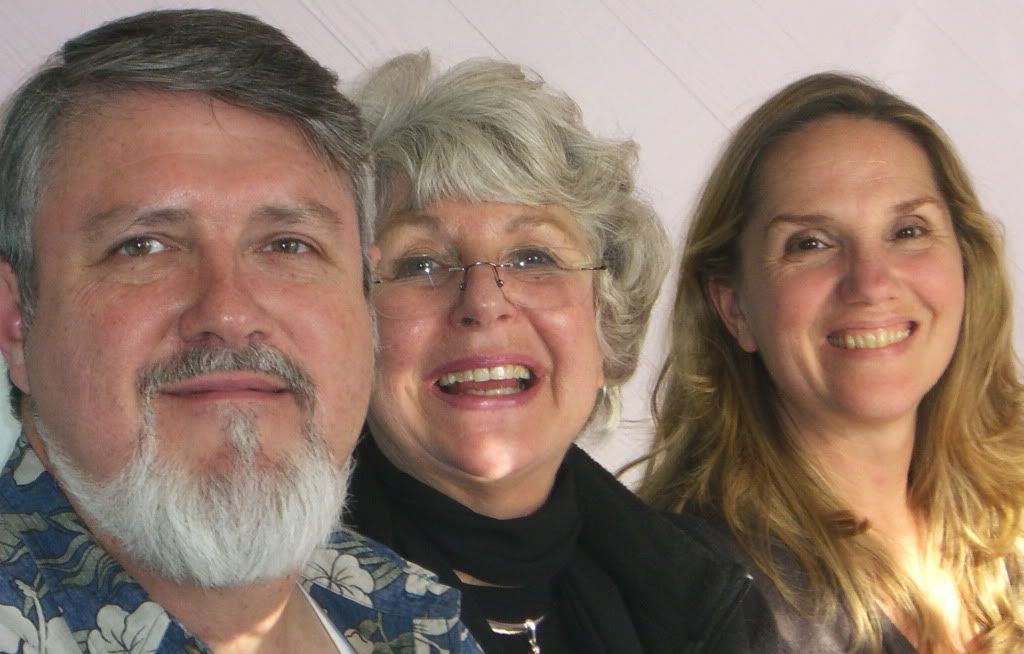
Dr David DeLapp DC
Chiropractor
Ellen Flowers FGM
Spiritual Life CoachEnergetic Nutritionist
Health Care Coordinator
Susan Richardson
Office Manager
Front Desk
Sherry Herrera
Front Desk Person
Hyla Carney
Physical Therapy
Susan McDonald
Catherine Cummings
Is there a sweet that is not poisonous? Yes!
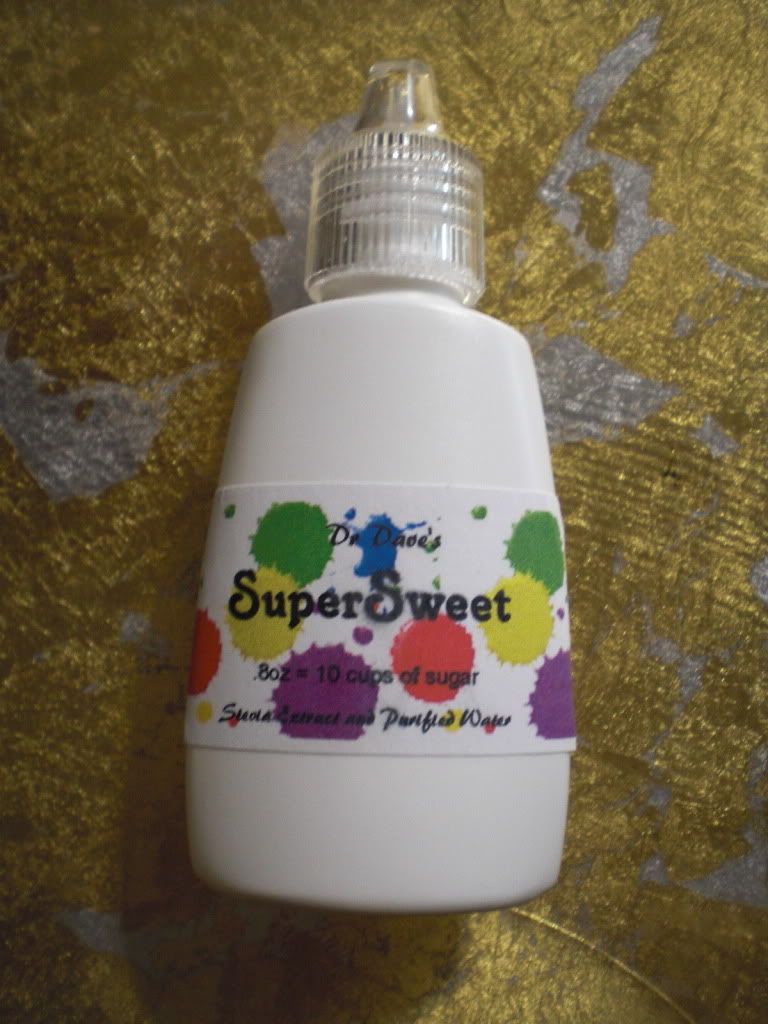 Dr Dave Supersweet Drops and 2X Sugar Substitute
New Products
Coconut Milk
| |