| Welcome |
|
June 12, 2013
Exercise and brain health
Hi ,

The whole time I was growing up there was a clear distinction between jocks and nerds. Jocks exercised all the time and were not expected to be the sharpest crayons in the box. Nerds shunned exercise like the plague because all their energy was supposed to go towards obscure mental activities. This social belief is actually a derivative of a much longer standing philosophical belief in the separation of the mind and the body that dates back to the early Greeks and later the French philosopher Rene Descartes. Suffice it to say, there is a long history of thinking of the body and the mind as very separate and almost opposite to each other.
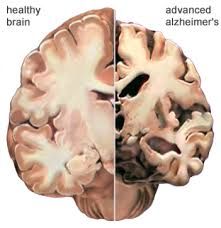
Naturally with this orientation, as brain researchers tackled brain degeneration diseases like Alzheimer's, they tried to figure out what could people do to make themselves mentally stronger and more resistant to such degeneration. Computer programs popped into existence claiming to be able to "exercise" your brain with all sorts of puzzles and crosswords and the like. The problem was that after a few years of actually testing the effectiveness of these programs they found that the programs did nothing at all to stall the onset of neurodegenerative diseases. Increasing thought-based activities did not help.
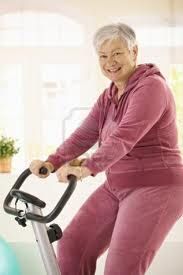
What did help were activities that involved movement. First it was discovered that learning to speak a new language helped and then that learning to play a musical instrument protected the brain. Finally the old mind - body separation concept came crashing down when it was discovered that the most protective thing a person could do to prevent brain degeneration was to exercise your physical body. What? How could that be? If exercise makes your brain stronger then why didn't it help all those jocks back in high school? Alas, protectively strengthening what you've got does not generate the motivation to use what you have.
So the next question is what kind of physical activity is needed to build protective strength to the brain? Will walking do the job, how about yoga? What does the brain need?
The answer is high intensity exercise is required to produce significant brain changes. What does that mean? In scientific terms that means exercising to produce an increase in your heart rate to maintain 70% of your maximum. Your maximum is considered to be 220 minus your age. I am 59 so that means my maximum is 220 minus 59 which equals a heart rate of 161 beats per minute. In order to take 70% of that, multiply 161 times .7 to equal 112.7. To make things simple, I'll round that up to 113 beats per minute as my heart rate target. Physically this target range means that you will break a sweat at this rate within three to five minutes; your breathing will be deep and rapid, and you will only be able to talk in short phrases.
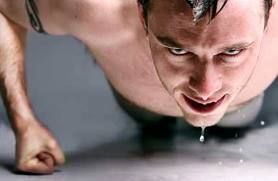
Now for the good news; to get significant positive brain changes you only need to work out at high intensity for three to five minutes, preferably daily. Three to five minutes, that's nothing for the benefit you get. What benefits are we talking about?
1. Increased Growth Hormone release; the hormone that tells your body to repair itself to keep you young.
2. Increased opioid response to decrease pain and improve mood, and activate T-reg cells to improve self tolerance.
3. Increased nitric oxide response to open up blood flow to the brain and peripheral tissues, decrease blood pressure, and increase brain function.
4. Increased production of BDNF: Brain Derived Neurotrophic Factor which tells the brain to heal itself and build new brain pathways.
5. Increase insulin receptor sensitivity, which combats diabetes, increases energy, decreases blood fat levels, and decreases blood pressure.
6. Enhances immune function and minimizes the stress response.
7. Increases serotonin levels to improve mood, and increase dopamine levels to improve focus and motivation.
The only downside to high intensity exercise is an increase in oxidative stress and over training syndrome for those people that over do it (like long distance runners). The best way to combat that is by eating plenty of fresh vegetables and fruits that are high in anti-oxidants.
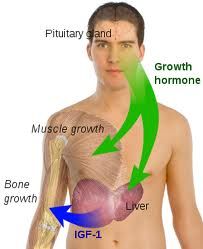
Let's spend a moment looking at the powerful value to increasing your growth hormone. GH (growth hormone) promotes many good things in the body. It is considered the Fountain of Youth Hormone.
1. It increases the burning of body fat.
2. It improves brain synapses (connections and communication).
3. It increases bone density to fight osteoporosis.
4. It improves heart muscle efficiency.
5. It improves your blood sugar balance.
6. It improves your immune function.
7. It decreases your recovery time after working your muscles and builds more muscles.
It is a current fad in some circles to go to anti-aging clinics to get growth hormone injections in order to look and feel younger. The problem is that the body is very efficient (or lazy depending on how you look at it). Any time you give the body a hormone from the outside as a pill or injection the body quickly adapts by saying "Oh look, I have plenty of this hormone now so I don't have to do the work to produce any on my own." This is called down-regulation of the hormone response. You end up needing more and more of the outside hormone as your body stops producing its own hormone. Just the opposite of this happens when you stimulate the body to increase its own natural growth hormone production.
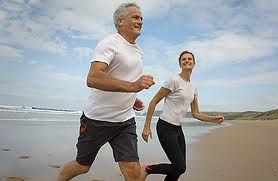
Normally after a brief high intensity workout you feel invigorated and your mood improves. If this does not happen and you feel nothing or even worse then this means that your body has too much oxidative stress or your cortisol stress hormones are too high. If this is the case, then this needs to be addressed before you engage in high intensity exercise.
So what does high intensity exercise look like for me? Personally I like going to the gym and using either the elliptical trainer or the stationary bike. These provide a good workout without worrying about high impact compression on the feet, knees, or spine. I also do some interval training to pump up my cardiovascular fitness even further. I hop on the machine and just start going at a good clip and get my heart rate up to my 70% of max for four to five minutes. Then for 30 seconds I go as fast as I possibly can, then slow down for 90 seconds. I repeat the 30 second/90 second cycle three to five times then cool down for a couple minutes. This extra interval work out is only done two times a week. Then I do some weight lifting (one set with exertion to failure on eight machines) for 20 minutes or so and that is it.
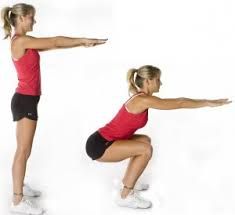
A gym membership is not necessary at all. Any exercise that raises your heart rate will do the job. You could wake up in the morning and do three to five minutes of squats or push-ups. In the gym the machines constantly monitor my heart rate, but at home you could get yourself an inexpensive pulse oximeter. This way you not only get an instant reading of your pulse but also your blood oxygen saturation. Here is one I found on Amazon that was inexpensive yet had the highest number of Five Star ratings: Finger Pulse Oximeter SM-110 with Carry Case and Neck/Wrist Cord
 Finger Pulse Oximeter SM-110 with Carry Case and Neck/Wrist Cord Finger Pulse Oximeter SM-110 with Carry Case and Neck/Wrist Cord Finger Pulse Oximeter Finger Pulse Oximeter
Any kind of exercise at all will have some mild benefits with brain health, blood flow, and immune health. But to get the growth hormone boost that will build your bones and brain and protect them from degeneration, you will have to pump up the activity level to the high-intensity realm. Fortunately you only need to get it up there for three to five minutes a day to get the benefits we are after.
The exercise does not even need to be aerobic. Weight training, when you push to your maximum, raises your heart rate quite nicely. So those of you that have bad knees or are too heavy to do aerobic training on even a stationary bike can switch to weight training. It is all about exerting yourself enough to break a sweat and get that heart rate up for just a few minutes a day. There is no need to slog along on the treadmill for 45 minutes at a time. In fact 45 min utes will greatly increase your oxidative stress, which damages your artery walls. That is why so many marathon runners die at such an early age. utes will greatly increase your oxidative stress, which damages your artery walls. That is why so many marathon runners die at such an early age.
I just worked out a couple hours ago. This is my Wednesday afternoon I take "off" to work on the newsletter. I left the house at 3:30, drove to the gym, worked out, and was back home by 4:05. That was the "long" workout that I do twice a week. Keeping the body and mind in shape does not require a big time commitment. But it does require commitment.
Enjoy,
David
Cucumber Avocado Macadamia Nut Dressing
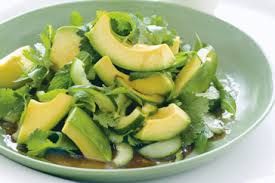
Nothing sets off a nice summer salad like a delicious creamy dressing. I know there are purists out there that think a salad should only be sprinkled with exotic virgin first press olive oil and a fancy wine vinegar or possibly simple lemon juice. But I am not one of those people. I grew up loving thousand island and creamy buttermilk ranch dressing. Just my clay feet showing up here I guess. Now I don't choose to use mayonnaise, ketchup, milk, or any of the other ingredients of those glorious dressings of the past, so I have to get creative.
Today Ellen says to me "Lets do a salad for lunch. What type of dressing can you use?" I checked the refrigerator and found nothing so I decided to invent a dressing for the occasion. Using the basic concept of oil and vinegar as the basis of any dressing I improvised. I had half an avocado, which I figured would add oil and creaminess. I tossed this into the blender along with some avocado oil and some plum flavored vinegar. There was a bag of raw macadamia nuts on the counter so I added a small handful of those to the mix. Then looking around the kitchen I spied one of those shrink-wrapped English cucumbers in the hanging fruit basket that was now several days old. Why not? I peeled that puppy and chopped it up and threw it into the blender as well. A few spices and a minute of blending and BAM - a new favorite dressing is born.
David's Cucumber Avocado Macadamia Nut Dressing
½ ripe avocado
½ cup avocado oil
½ cup tasty vinegar of your choice
1 cucumber peeled and chopped
¼ cup macadamia nuts
½ tsp. black pepper
½ tsp. dill weed (dried)
1 tsp. coconut aminos (optional)
2 tsp. dried onion flakes
2 tsp. fish sauce
4 drops Dr. Dave Supersweet Drops
Blend everything on medium until fairly smooth and enjoy!
Ultrasound Physical Therapy
Now available in the office
Tuesdays and Fridays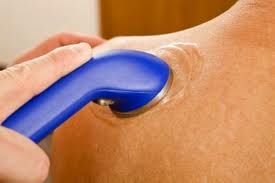
How to find us -
Our address is 9725 Fair Oaks Blvd.
Finding the new location is very easy. Coming from highway 50 up Sunrise Blvd, you turn left and go up a block. We are on the right hand side - the building just past the Subway Sandwich shop. If you are coming down Sunrise from the Mall area then just turn right on Fair Oaks Blvd and up a block on the right.
If you are coming from the Roseville area you could come down Sunrise Blvd, but that is a long trek. It is probably shorter time wise to come down Auburn Blvd - San Juan Ave like you have been for the Sunset
office, but instead of turning left at Sunset, keep going straight 3
more lights to Fair Oaks Blvd and turn left. Go down 2 lights to New York Ave, go through the intersection, and immediately turn into the turn lane once the center divider ends. We are on the left.
|
H
|
On the Wire
|
Tactical Breathing Can Stop Stress on the Spot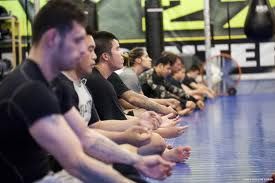
-
How do you quell stress induced fear in order to handle a crisis? Firefighters, police, and military are now using an ages old yoga breathing technique to do just that. Sometimes called combat breathing or square breathing, it can calm down those feelings of panic right now so you can deal with what is going on. Simply taught, it is slowly inhaling for a count of four seconds, holding your breath for four seconds, exhaling slowly for four seconds, and again holding your breath for four seconds. Repeat this cycle until calm.
Tactical Breathing
_____________________________________________
"A weak mind is like a microscope, which magnifies trifling things but cannot receive great ones."
~ Lord Chesterfield
__________________________________
It is estimated that within 20 years 1 in 4 Americans will get Alzheimer's. What can you do now to prevent this? Significant reductions in risk are associated with getting higher levels of the B vitamins - particularly B6, B12, and folate. These B vitamins reduce levels of a dangerous amino acid called homocysteine that causes the brain to shrink. Getting enough B vitamin has been shown to reduce brain shrinkage by as much as seven fold in the brain areas related to Alzheimer's. This article discuses a complete Anti-Alzheimer's lifestyle.
"Our strength grows out of our weakness.."
~Ralph Waldo Emerson
_______________________________
Why Finnish babies sleep in cardboard boxes
For the last 75 years Finnish expectant mothers have been given a new baby starter kit by the government that has been credited with Finland now having one of the lowest infant mortality rates in the world (much lower than ours.) The cardboard box has everything a new mother needs, and the box itself has a mattress in the bottom to serve as the baby's first bed.
"The greatest weakness of all is the great fear of appearing weak.."
~ Jacques Bnigne Bossuet
________________________________________________
You
are free to reprint this article in your newsletter as long as you
include the following statement in the same size type and color:
"This article appears courtesy of Fair Oaks Health News, offering natural and healthy solutions for body, mind and soul. For a complimentary subscription,
visit http://www.fairoakshealth.com"
|
| |
|
_______________
to check on old newsletters
_______________
About Dr. DeLapp
|
|
Dr. DeLapp has been a philosopher, non-force Chiropractor, medical intuitive, and health innovator for over 30 years. He began experimenting with medical intuition in 1972 while studying physics at UC Davis. In addition to physics he designed and completed an individual major in the philosophy and psychology of education. Shortly after he choose to pursue a career in the only truly health oriented profession available at that time, Chiropractic. He graduated with honors in 1981 with his doctorate and opened a private practice.
Since that time he has continued his research into the effects of consciousness and learning on health.
He developed the Biomagnetic Retraining system for correcting movement abnormalities.
Since 1991 he has focused on developing a powerful system for uncovering and assisting the mind-body connection in health and personal growth. The in-depth coaching, guided by the subconscious direction from the body, is called Heartflow and the simpler mind-body retraining for health and unfoldment he has named Gracework. Both are available at Fair Oaks Health.
Fair Oaks Healing
& Arts Center
Staff
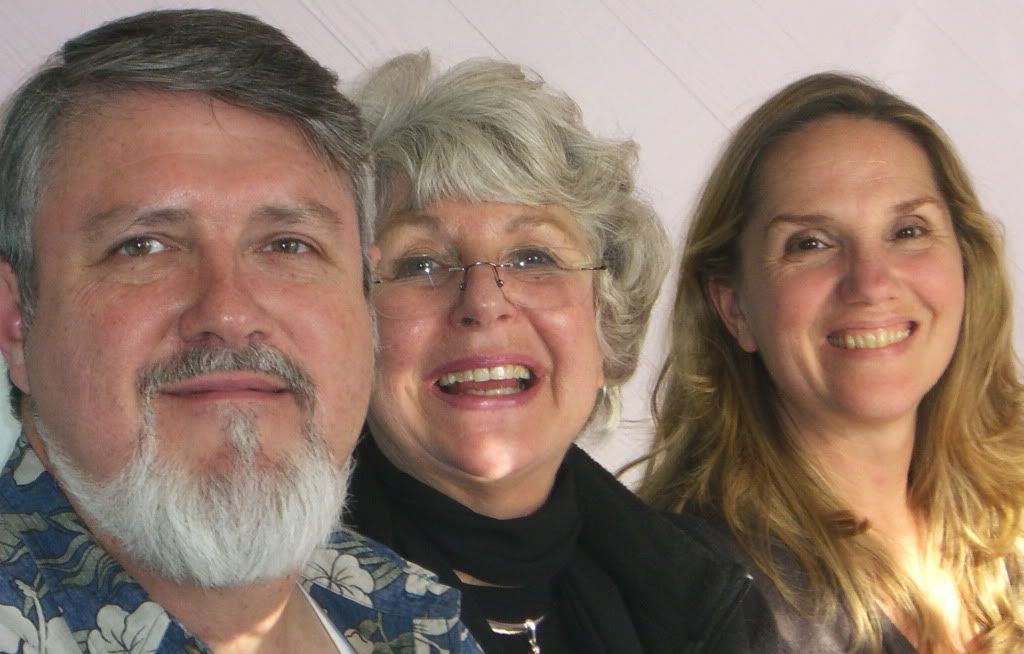
Dr David DeLapp DC
Chiropractor
Ellen Flowers FGM
Spiritual Life CoachEnergetic Nutritionist
Health Care Coordinator
Susan Richardson
Office Manager
Front Desk
Sherry Herrera
Front Desk Person
Hyla Carney
Physical Therapy
Susan McDonald
Catherine Cummings
Is there a sweet that is not poisonous? Yes!
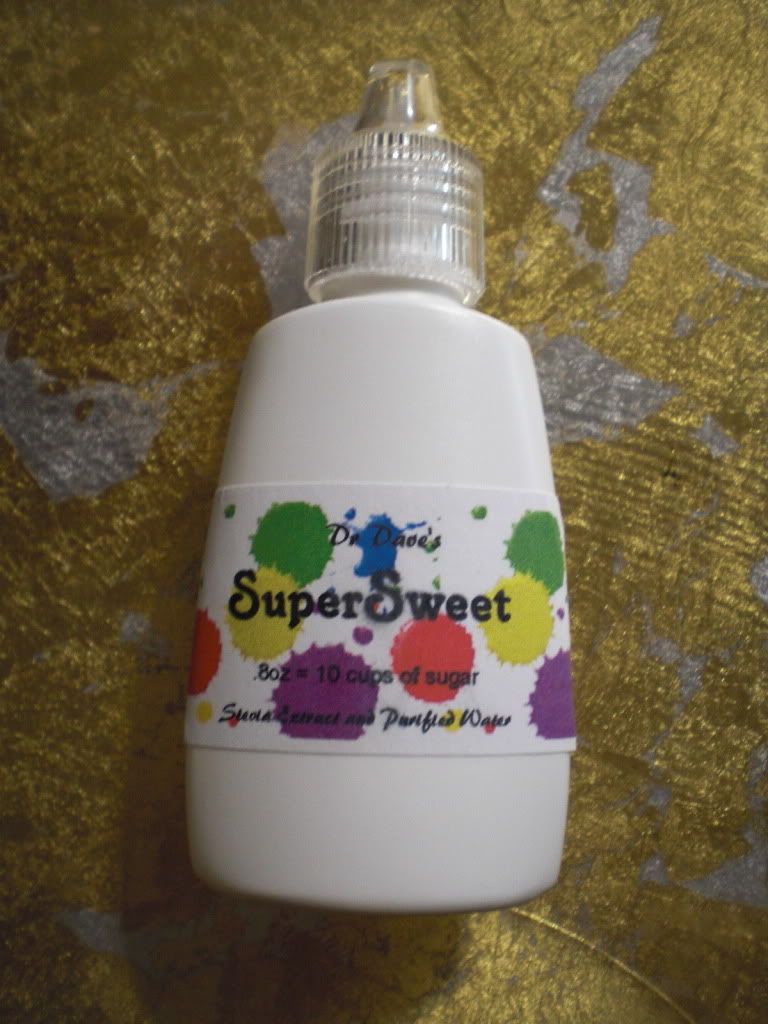 Dr Dave Supersweet Drops and 2X Sugar Substitute
New Products
Coconut Milk
| |