| Welcome |
|
This newsletter is about finding sweetness in life.
October 30, 2011
Looking for the sweetness
Hi ,
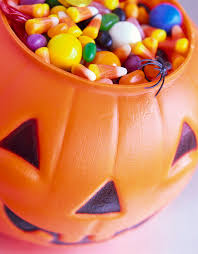
 This all culminates in the Yuletide festivities filled with much eating and merriment which hits its height on New Years eve with a blowout party filled with the sweetness of life. This all culminates in the Yuletide festivities filled with much eating and merriment which hits its height on New Years eve with a blowout party filled with the sweetness of life.
Life begins again with New Years day and the start of all our New Years promises to ourselves. The season of harvest abundance when the work of the year has paid off is over and we settle in for the oncoming winter.
What are we seeking in the sweet treats of this  season? Yes, sugar tastes good, but it tastes good all year long. What are we really after? I would conjecture that what we are really after is the feeling of harmonious connection. Historically this is the time of the year when people get together and celebrate their connections to others. We are social creatures, but through much of the year we are focused on our own personal needs and accomplishments. The oncoming winter traditionally draws people together as the strength of family and tribal support helps everyone survive the harshness of winter. But as much as squeezing everyone together aids survival, it is also a strain socially. People are diverse and their differences start rubbing each other the wrong way when they are all squeezed together. season? Yes, sugar tastes good, but it tastes good all year long. What are we really after? I would conjecture that what we are really after is the feeling of harmonious connection. Historically this is the time of the year when people get together and celebrate their connections to others. We are social creatures, but through much of the year we are focused on our own personal needs and accomplishments. The oncoming winter traditionally draws people together as the strength of family and tribal support helps everyone survive the harshness of winter. But as much as squeezing everyone together aids survival, it is also a strain socially. People are diverse and their differences start rubbing each other the wrong way when they are all squeezed together.
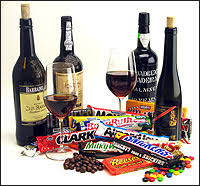
And so enters sugar (as well as that specialized sugar - alcohol). We are naturally wired to like sweet tastes because as hunter-gatherers, sweet foods were almost always safe to eat. To a hunter, meat is sweet. If it isn't, then it has turned bad and shouldn't be eaten. Fruit sweetness is especially attractive because it readily converts to fat on the body for the winter lean times. Vegetables are generally mildly sweet and provide us a good food source. Intense sweet taste did not really exist for hunter-gatherers.
As we became more "civilized" and began growing our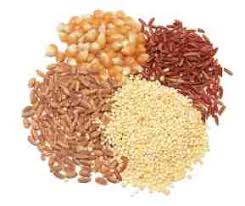 food ourselves, we started eating highly concentrated carbohydrate containing foods (grains) because they could be stored for years and used as needed. Plus grains could be used to brew alcoholic beverages - a necessary "lubricant" for civilization. When fermented, grains break down into sugar, which then is converted into alcohol. In ancient civilizations beer was considered so valuable (and later wine) that often the only possession of value a common man would take to his grave was his beer mug. food ourselves, we started eating highly concentrated carbohydrate containing foods (grains) because they could be stored for years and used as needed. Plus grains could be used to brew alcoholic beverages - a necessary "lubricant" for civilization. When fermented, grains break down into sugar, which then is converted into alcohol. In ancient civilizations beer was considered so valuable (and later wine) that often the only possession of value a common man would take to his grave was his beer mug.
Sweetness in small quantities is a healthy message concerning food quality. When sweetness comes in  large intense forms it becomes something else all together. Where small quantities of sweetness simply prepare the body to take nutrition into the cells for growth and repair, large quantities have completely different effects - drug effects. large intense forms it becomes something else all together. Where small quantities of sweetness simply prepare the body to take nutrition into the cells for growth and repair, large quantities have completely different effects - drug effects.
How are alcohol and sugar useful when we cram lots of people together? As I said, we are all different. Dealing with differences requires many skills and lots of effort - skills most of us are not great at. Both sugar and alcohol in large quantities (meaning more than half an ounce) act as dissociative drugs. They  separate us from feeling input from the world. They make us emotionally numb. When we are numb, we don't mind all the irritating and painful differences in all the people around us. We use sugar for the same reasons we like novocaine when we get a filling put in at the dentist's office. Sugar blocks the pain of close participation with many others that we may not feel actually comfortable being around otherwise. Alcohol does the same thing with slightly different brain pathways. separate us from feeling input from the world. They make us emotionally numb. When we are numb, we don't mind all the irritating and painful differences in all the people around us. We use sugar for the same reasons we like novocaine when we get a filling put in at the dentist's office. Sugar blocks the pain of close participation with many others that we may not feel actually comfortable being around otherwise. Alcohol does the same thing with slightly different brain pathways.
It is interesting that our liver's react to both sugar and alcohol in exactly the same way. In fact our sugar  consumption has gotten so high that there in now an epidemic of non-alcoholic fatty liver disease - all from too much sugar consumption. It used to be that a fatty liver was clinically a sure sign of an alcoholic. Likewise, just as alcohol is addictive, sugar is even more addictive. In fact sugar is more addictive than cocaine. consumption has gotten so high that there in now an epidemic of non-alcoholic fatty liver disease - all from too much sugar consumption. It used to be that a fatty liver was clinically a sure sign of an alcoholic. Likewise, just as alcohol is addictive, sugar is even more addictive. In fact sugar is more addictive than cocaine.
For those of you that say you don't have any attraction to sugar, check your starch consumption. Starch is just long chains of sugar that break down 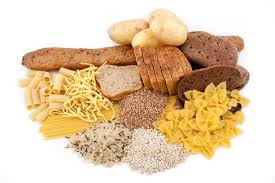 into simple sugar within a few minutes of being eaten. So pasta is sugar, bread is sugar, beans are sugar, potatoes are sugar, rice is sugar, fruit is sugar, even vegetables are sugar (although veggies usually break down slowly enough to avoid the sugar drug reaction). If it is not a protein or a fat, then it is a sugar. into simple sugar within a few minutes of being eaten. So pasta is sugar, bread is sugar, beans are sugar, potatoes are sugar, rice is sugar, fruit is sugar, even vegetables are sugar (although veggies usually break down slowly enough to avoid the sugar drug reaction). If it is not a protein or a fat, then it is a sugar.
Sugar opens up the brain pathways that relax us and tell us we are ok. It surges our serotonin levels in the brain that mellow us out. It makes us happy - at least our brain thinks we are happy. Why do I say it that way? Because the feeling created by a drug is not real - just an illusion.

True happiness comes from our successful ability to express and act on our feeling truths in a way that harmonize with our physical and social environment in each moment. To suppress who we are to "get along" feels bad and to suppress others and demand they be the way we are also feels bad. It is only successful win-win relationship skills that truly feel good down deep inside. We (our ego) might get excited when it thinks it is going to win and make the world be the way we want, but excitement is not the same thing as true feeling good. Feeling good comes from the heart where we are one with all life so much that we can't really be happy if others have to suffer for our happiness. Any time someone has to give up their feeling truth to be the way you want, they are suffering.
(Notice I say feeling truth instead of Truth. This is because our minds confuse our belief in various stories we have learned as Truth. These are just stories. Everybody has them. Feeling truths are internal states of virtue that we have learned through personal experience with what works with life. This kind of truth is very different from the stories we choose to believe.)

So, it is not surprising that the time of year we all start coming together for mutual support to survive the winter and celebrate family and tribe, that the use of sugar and alcohol skyrockets. And since its use is then associated with lots of good feelings (due to the numbing of the also occurring bad feelings), we learn to associate sugar with feeling good. Besides, it tastes good.
So where do I stand on the sugar issue? Yes, we all know how deadly sugar is for our health. We all know sugar sets us up for cancer, heart disease, diabetes, high blood pressure, brain disorders, mental illness, digestive malfunction, inflammation of all sorts, and so on. It causes everything from cavities to toenail  fungus. But sugar (and alcohol) also enables us to stand our annoying relatives and co-workers during this time of brotherly love. It is a coping tool, and like all coping tools the trick is to use them just enough to help you get by, but not enough that you are not motivated to still develop the skills that would enable you to actually get along in life without the tools. fungus. But sugar (and alcohol) also enables us to stand our annoying relatives and co-workers during this time of brotherly love. It is a coping tool, and like all coping tools the trick is to use them just enough to help you get by, but not enough that you are not motivated to still develop the skills that would enable you to actually get along in life without the tools.
For myself, when I notice that I am craving sugar, I know that I am not centered in myself. When I am centered, I am the source of all my feelings. I am not  looking outside myself for something to fill a feeling "need" in myself. If I feel a "need" I start looking for what relationship skill or virtue I need to bring out or build to forge a fulfilling connection and harmonious exchange with life. For example, if I am feeling unloved or needing attention, then I know that I am not expressing good connection skills with life that enables me to exchange love and attention with others. If I just cover up these feelings with sugar, then I am not motivated to take the risks involved in building such skills. looking outside myself for something to fill a feeling "need" in myself. If I feel a "need" I start looking for what relationship skill or virtue I need to bring out or build to forge a fulfilling connection and harmonious exchange with life. For example, if I am feeling unloved or needing attention, then I know that I am not expressing good connection skills with life that enables me to exchange love and attention with others. If I just cover up these feelings with sugar, then I am not motivated to take the risks involved in building such skills.
On the other hand if I am at a family party and my social deficits are popping up so fast I can't keep track of them, then some sugar might be just the thing to enable me to survive the occasion without my social anxiety leaving me hiding in the corner the whole time.
One of my operating mottoes is "It is not what you do, but why you do it that counts." So is sugar good or bad? Neither, it just is what it is. Seeking the sweetness of life is natural for us. True sweetness comes when we are able to connect in harmony with life and others. If we are not able to achieve that place at the moment, then cookies make a good replacement while we are learning how to connect in harmony.
Take care,
David
Get Your Health Action Plan Outline Here CLICK HERE
Health Challenge #10 Improve the other half of your digestion. Take a good probiotic every day.
Health
begins in the gut. Last issue I talked about the upper portion of the
gut - the stomach and duodenum where hydrochloric acid and enzymes are
needed to digest our food. From this point downward - the 25 feet of intestine and the colon - the main support we need is good intestinal flora. Healthy bacteria and yeasts line the gut and protect it from attack by bad bacteria and bad yeasts. These bacteria also manufacture some of our B vitamins and complete the digestion of our food. 
Every culture in the world has their source of beneficial bacteria and
yeasts in the diet in the form of fermented foods that are consumed
daily. Japan has miso and natto, Korea has kimchi, middle east has
yogurt, Europe has sauerkraut, and so on. There are hundreds of
fermented types of foods used to help our guts thrive. Our culture has
forsaken fermenting foods other than beer for the most part. We make
fake fermented foods like pickles and sauerkraut with vinegar rather
than actually allowing the foods to ferment naturally. Consequently we
need to supplement our diet with the proper bacteria. This becomes
critical whenever we have to use antibiotics, as these kill off our good
protective bacteria and let bad yeasts grow in their place.
I recommend a probiotic with naturally occuring gut bacteria and also
containing healthy yeasts to combat negative yeasts in our gut. Most probiotics on the market only have a couple kinds of bacteria such as acidophilus. Acidophilus is not a natural bacteria for an adult gut as it produces lactic acid which inhibits the production of butyrate, the chief substance the gut uses to heal itself...so
other probiotics are better. My current favorite is Immuno-Synbiotic which we have in the office.
If you missed any of the previous health challenges
Special Offer: Free Health Evaluation
Discover your true health status
________
Ouestions - if you have questions of
a health or growth nature we could discuss in this newsletter, or if
you have comments or ideas about a future newsletter focus please email
me at:
david@fairoakshealth.com
You are free to reprint this article in your newsletter as long as you include the following statement in the same size type and color:
"This article appears courtesy of Fair Oaks Health News, offering natural and healthy solutions for body, mind and soul. For a complimentary subscription,
visit http://www.fairoakshealth.com"
|
H
|
On the Wire
|
-
Graffiti Yarnstorming

As a public service I thought I would inform you my patients of a looming new threat to the normalcy of our lives - Yarnstorming. Knitting terrorist groups are springing up all over the world and applying all manner of knitted articles to public spaces. You might be strolling along a favorite route in your city only to be confronted by a wild array of knitted objects for no apparent reason. Such mindless displays of decorative tomfoolery are obviously the work of subversive groups of disenchanted baby outfit makers. There is clearly a statement
being made here - but nobody has been able to decipher the alien code embedded within the yarn patterns. If you encounter any of these yarnstormed objects, do not touch them, the fuzzy silliness may implant overwhelming urges to express your otherwise successfully repressed playful nature. The link below will show you some of the other horrific attacks on our previously safe and sane public spaces.
________________________________________________
"Insanity -- a perfectly rational adjustment to an insane world.."
~ R.D.Lang
Resveratrol stops breast cancer growth
Good news from the world of experimental biology on stopping the effects of estrogen on the growth of breast cancer cells. The extract from red wine called Resveratrol has been found to inhibit the growth of hormone resistant breast cancer cells. Of course the researchers caution that this finding does not mean women should go out and start taking resveratrol - although why not is kind of vague, especially since resveratrol is already one of the most potent anti-aging compounds known. Oh wait, I forgot, there is no industry profit in using a simple nutrient to fight disease. No profit means no funding for our researchers...
"Your goals, minus your doubts, equal your reality."
~ Ralph Marston
Free Medical Tutorials
Dr Fischer forwarded this link to me the other day. It is a wonderful service provided by the US National Library of Medicine - a huge number of animated tutorials that explain in simple language and video animations various diseases and conditions. They cover symptoms, diagnosis, prevention, and standard medical treatment. I went through one on floaters in the eye and found it to be very well done. Check it out.
"Sensual pleasures are like soap bubbles, sparkling, effervescent. The
pleasures of intellect are calm, beautiful, sublime, ever enduring and
climbing upward to the borders of the unseen world."
~ John H. Aughey
_________________________________________________
|
| |
|
_______________
to check on old newsletters
_______________
About Dr. DeLapp
|
|
Dr. DeLapp has been a philosopher, non-force Chiropractor, medical intuitive, and health innovator for over 30 years. He began experimenting with medical intuition in 1972 while studying physics at UC Davis. In addition to physics he designed and completed an individual major in the philosophy and psychology of education. Shortly after he choose to pursue a career in the only truly health oriented profession available at that time, Chiropractic. He graduated with honors in 1981 with his doctorate and opened a private practice.
Since that time he has continued his research into the effects of consciousness and learning on health.
He developed the Biomagnetic Retraining system for correcting movement abnormalities.
Since 1991 he has focused on developing a powerful system for uncovering and assisting the mind-body connection in health and personal growth. The in-depth coaching, guided by the subconscious direction from the body, is called Heartflow and the simpler mind-body retraining for health and unfoldment he has named Gracework. Both are available at Fair Oaks Health.
Fair Oaks Healing
& Arts Center
Staff
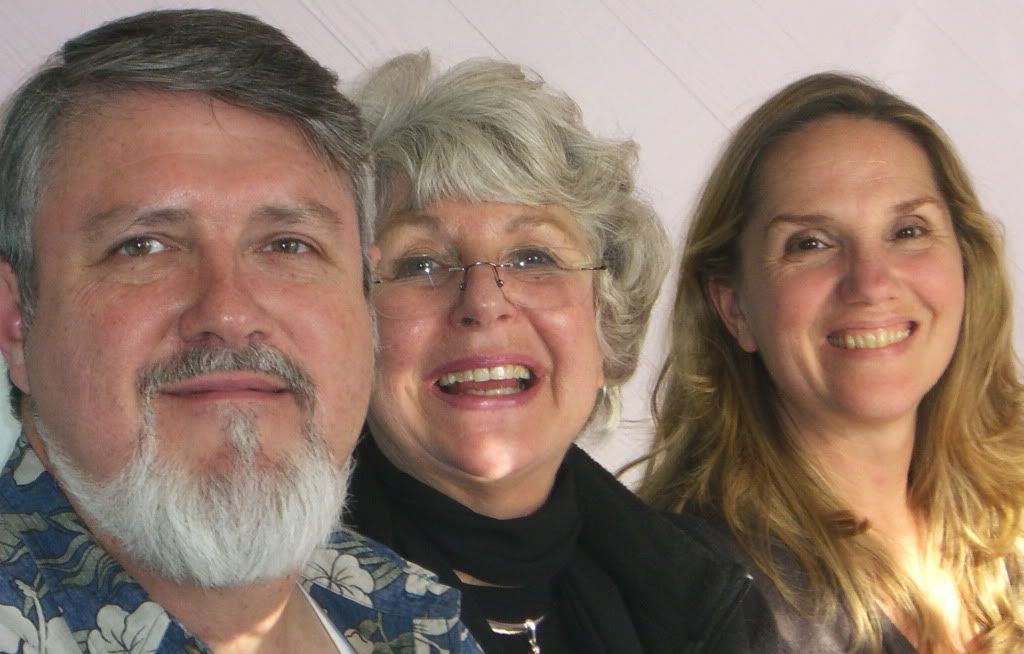
Dr David DeLapp DC
Chiropractor
Ellen Flowers FGM
Spiritual Life CoachEnergetic Nutritionist
Health Care Coordinator
Susan Richardson
Office Manager
Front Desk
Gypsy Andrews
Metabolic Nutritionist
Lifestyle Support Person
Front Desk
Susan McDonald
| |