|
This newsletter is about Tai Chi and balance.
June 19, 2011
Balance Challenge
Hi ,

Lets try something now without any thought put into it - stand up now with your feet close together and close your eyes for a count of ten and then with your eyes still closed try to stand on just one foot for at least 20 seconds.
Go ahead - give it a try right now. I will still be here when you finish...
Good, lets see how well you did:
When you stood up did you use your hands at all to help push yourself up or to stabilize yourself while getting up?
While you had your eyes closed for the first ten seconds, how comfortable were you with your balance?
 How many seconds were you able to stand on one foot with your eyes closed? How many seconds were you able to stand on one foot with your eyes closed?
When you sat back down did you use your hands to steady yourself?
These are all tests of your balance and position sense. If your balance and position nerves are healthy, you will not be inclined to use your hands to get up and down. You will feel safe and comfortable with your eyes closed while your feet are close together, and you will be able to stand on one foot for at least 20 seconds with your eyes closed. How did you do? Yeah me too.
Why is this important? Falls are the number one  cause of death in folks over 65 - not cancer, not heart disease - falls. Even more important, the fear of falling crushes a person's quality of life. Your confidence to do much of anything is lost when you can't even trust your body to hold you upright. cause of death in folks over 65 - not cancer, not heart disease - falls. Even more important, the fear of falling crushes a person's quality of life. Your confidence to do much of anything is lost when you can't even trust your body to hold you upright.
Unless you are planning on dying young, this applies to every one of you. What is the point of all the things we do for our health if we are only going to end up afraid to move and do anything in life?
 Good news! The degeneration of our balance and position sense nerves is not a byproduct of age. Those nerves are just like muscles - they degenerate when you don't use them. Preventing their degeneration, even reversing their degeneration back to vibrant health is achievable. You can do it now. Good news! The degeneration of our balance and position sense nerves is not a byproduct of age. Those nerves are just like muscles - they degenerate when you don't use them. Preventing their degeneration, even reversing their degeneration back to vibrant health is achievable. You can do it now.
But normal exercise does not work these nerves. How many of you out there under 65 failed the simple test above? Our modern lifestyle does not provide us opportunity or demand that we keep these nerves working properly. What is required is not difficult, and if you lived in the wild you would naturally meet these special exercise needs just in the routine of your daily living. In modern living we have to consciously spend time every day keeping this degeneration at bay in order to be able to have the life we want as we get older. time every day keeping this degeneration at bay in order to be able to have the life we want as we get older.
How do you do this? This question has actually been an area of considerable research for many years. Many physical therapy programs have been designed and tested. Yet, according to the  National Institutes of Health, one system has shown the best results at building balance and preventing falls - Tai Chi. Tai Chi has been around since the 1500's in various forms as both a martial art and a health generating system. National Institutes of Health, one system has shown the best results at building balance and preventing falls - Tai Chi. Tai Chi has been around since the 1500's in various forms as both a martial art and a health generating system.
I have been recommending Tai Chi to you my patients for at least 20 years either as local community classes or as a home video. Most of you have not found that this worked for you. I began looking for a way to incorporate balance training into my office about a year ago and fortunately just recently discovered that one of my long time patients is a Tai Chi instructor - has been for 12 years. We were discussing a new program for a simplified short form of Tai Chi specifically being created for fall prevention. I had to ask - could she teach Tai Chi to my patients? She said she would be delighted.

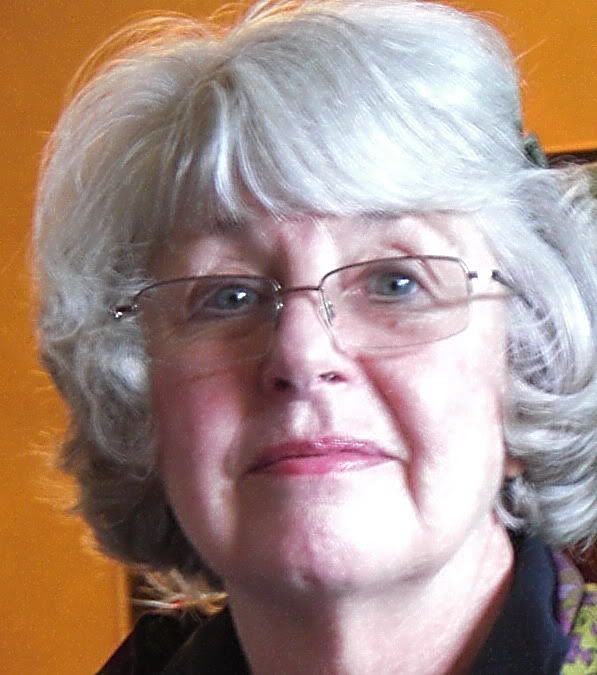
Introducing Kathy Villegas...
Here is a short article she wrote about Tai Chi as an introduction:
Benefits of Tai Chi
One of the many benefits of practicing the ancient art of Tai Chi is stress reduction. Stress is and will always be part of our everyday life. What stresses us is different for each person.
When we become stressed, our bodies go through a series of chemical and physiological changes to manage that stress. This is oftentimes stated as the fight-or-flight syndrome, or response. During times of stress we have an increased blood pressure, heart rate, respiration rate, blood flow to the muscles, and metabolism. In other words - our body is getting ready to fight off a physical threat, or run from it. It is easy to see that constant evocation of this bodily response to stress can harm us over time. The most obvious is increased blood pressure that may eventually lead to a stroke or heart attack.
Fortunately, the body also has an opposite reaction to the fight-or-flight response, and that is known as the relaxation response. Both of these reactions are automatic, that is, they are directed by our body's autonomic, or involuntary nervous system. When the threat (stress) is removed, our bodies move from fight-or-flight, to relaxation. The idea then, is to spend most of our time in the second area - relaxation.
Dr. Hebert Benson of the Mind/Body Medical Institute at the Harvard Medical School spent many years researching this phenomenon. In his book, "the Relaxation Response, he discusses the use of meditation to relax our nervous system. This book is certainly worth reading. It is very detailed about this study and the support of his findings. In his subsequent book, "Timeless Healing: The Power and Biology of Belief", he describes two essential steps to elicit the relaxation response.
1. Repetition of a word, sound, phrase, prayer, or muscular activity.
2. Passively disregarding everyday thoughts that inevitably come to mind and returning to your repetition.
This is where our practice of Tai Chi comes in. Tai Chi has often been described as "meditation in motion". It is a series of gentle movements, one connected to the other. In the concentration of breath and the Tai Chi movements the mind releases the thoughts that have brought on the feeling of stress and uneasiness and replaces them with the sense of relaxation and well-being.
It may not seem that way during your first class. It may seem overwhelming at first, but I believe that in retrospection of the first class you will remember that you were not thinking of anything other than following along with the instructor. There you are - you have just taken the first two essential steps in eliciting the Relaxation Response.
Kathy Villegas
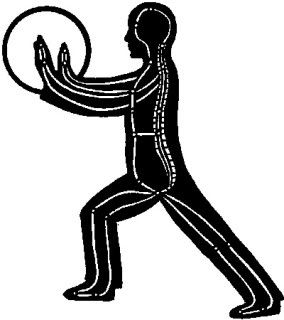 I am working on creating a specially designed type of Chiropractic adjustment for enhancing balance to combine with twice weekly Tai Chi classes to help all of you regain and keep your balance nerves working well. By combining the two we should be able to have the Tai Chi covered by Medicare or private insurance. I am working on creating a specially designed type of Chiropractic adjustment for enhancing balance to combine with twice weekly Tai Chi classes to help all of you regain and keep your balance nerves working well. By combining the two we should be able to have the Tai Chi covered by Medicare or private insurance.
I visualize an initial balance exam followed by two rounds of 10 training classes with recheck exams after each round to demonstrate to the insurance companies of the benefit of this type of treatment. Because of the learning environment involved classes would need to be small, 4 to 6 people each, in order to make sure each person gets enough individualized attention. The classes are planned to take place in the big room at my office. I would like to see a dozen classes a week taking place as I know there are hundreds of you that need to improve you balance. The classes and balance adjustments are not limited to just my patients so feel free to invite your friends to participate. classes a week taking place as I know there are hundreds of you that need to improve you balance. The classes and balance adjustments are not limited to just my patients so feel free to invite your friends to participate.
I shall keep you updated as we bring this program up to speed. If you are interested, please click here to let me know of your interest.
Take care of yourself.
Good Journey,
David
Ellen Update:
Well Ellen is getting steadily stronger. She is up to seeing three people a day.
We saw her Gastroenterologist a few days ago (the one that put a stint in her bile duct to keep it open). He said he would need to replace it in a couple weeks. We were hoping he was just going to take it out but he said Ellen needed to keep one in place for 6 to 8 months while the duct scared up enough to hold its shape. The stints only last 2-3 months and have to be replaced 2 or 3 times. He is ordering up another ultrasound exam - still trying to figure out where all the leaking bile has gone.
So the story continues...
Experience Ellen's Life Coaching Process during her Free Health Exam
Discover your true health status
________
Ouestions - if you have questions of a health or growth nature we could discuss in this newsletter, or if you have comments or ideas about a future newsletter focus please email me at:
david@fairoakshealth.com
|