|
This newsletter is about getting fit.
March 31, 2011
Progressive Fitness
Hi ,
 The days are getting longer and the weather is getting nicer. Going outside is really quite nice lately. Yes, we are still having the intermittent spats of rain, but winter is definitely on the wane and spring is in the air. Soon spring fever will set in for real and we will want to get out and play. But if you are like me, dark and cold send me inside to hibernate. I have forgotten what my gym even looks like. It has been months since I have set foot in there. But now I am feeling the urge to start moving again - spring thaw is setting in.
 Warning! If you have been slacking off a bit on your exercise like me, be careful. You have lost a fair bit of muscle tone, flexibility, and coordination. Our bodies are very efficient at allocating resources. If we are not using any part of our body to its full potential, the body recycles the tissues and allocates them elsewhere. This is true of bones, muscles, ligaments, tendons, nerves, and even the brain. We are weaker, slower, and less coordinated than we were in the fall. For example, a simple two weeks of bed rest (as a number of you were forced to do this last winter) can cause you to lose 50% of your muscle tone and impair your coordination and health for the rest of your life. Warning! If you have been slacking off a bit on your exercise like me, be careful. You have lost a fair bit of muscle tone, flexibility, and coordination. Our bodies are very efficient at allocating resources. If we are not using any part of our body to its full potential, the body recycles the tissues and allocates them elsewhere. This is true of bones, muscles, ligaments, tendons, nerves, and even the brain. We are weaker, slower, and less coordinated than we were in the fall. For example, a simple two weeks of bed rest (as a number of you were forced to do this last winter) can cause you to lose 50% of your muscle tone and impair your coordination and health for the rest of your life.
"Use it or lose it" is the rule in the body. But don't jump straight back into your old workout regime. You are seriously flirting with injury if you do. You need to build back up slowly. You need to engage Progressive Fitness.
Let's begin with aerobic or cardio workouts. The current physiologic evidence points to interval training as the best all round training technique for general fitness. But the information available in conventional media gives you workout regimens for people that are already in good shape. What if you are not in good shape, either because you have slacked off all winter, or are new to working out, or are recovering from an injury, or are at an advanced age? What should interval training look like for these folks?
It can look like this:
Find an activity that can be done both slowly and very fast such as walking/running, stationary or outside bicycling, elliptical, mini-trampoline running in place, Hindu squats, ski machine - something that uses the big muscles of the lower body as well as the muscles of the upper body at the same time. The idea is to progressively increase the amount of time in the fast phase of the exercise while keeping the slow phase to 2 to 3 minutes.
For those that are really poorly conditioned begin with 2 -3 minutes of your chosen activity slowly, then shift into doing the same activity as rapidly as you possibly can for 5 seconds. Shift back to slow mode for another 2-3 minutes then fast mode for 5 seconds. Repeat this slow then fast pattern five times. You are done. Repeat this workout three times a week always leaving at least one day for recovery and muscle building between exercise days. If you add up the numbers, you will see that your aerobic conditioning should only take fifteen minutes three times a week.
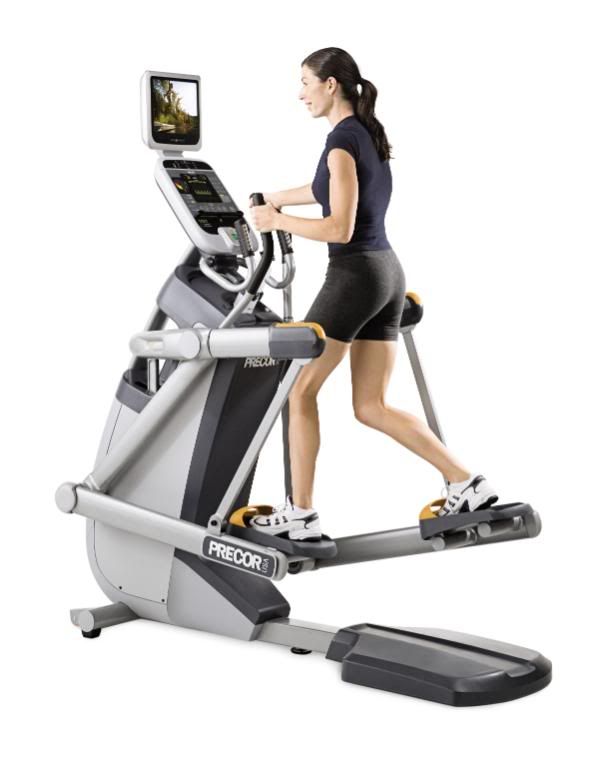 After two weeks of exercising this way increase your fast exercise time period to ten seconds. That means you will now do 2 -3 minutes of slow exercise followed by 10 seconds of moving as fast as you can, then back to 2 - 3 minutes of slow, repeating this pattern of slow then fast 5 times. After two weeks of exercising this way increase your fast exercise time period to ten seconds. That means you will now do 2 -3 minutes of slow exercise followed by 10 seconds of moving as fast as you can, then back to 2 - 3 minutes of slow, repeating this pattern of slow then fast 5 times.
After another two weeks increase your fast exercise time to 15 seconds with 5 cycles of slow and fast. Every 2 weeks you increase the fast time period by 5 more seconds until you reach 30 seconds of moving as fast as you can while still maintaining 2 - 3 minutes of slow movement between the fast periods. For average folks, this will produce all the aerobic fitness you need.
The second thing you want to do if possible is to switch around between different activities, i.e. cycling one day, the elliptical the next, and running the third workout. This will help you develop better stability and better total muscle tone. When we do the same  exercise over and over, after a few weeks our body starts to decrease our total muscle size and leave us with only the part of the muscle we need to do the specific exercise we are repeating frequently. Doing a variety of exercises engages our total muscles and prevents muscle loss due to this muscle efficiency process. exercise over and over, after a few weeks our body starts to decrease our total muscle size and leave us with only the part of the muscle we need to do the specific exercise we are repeating frequently. Doing a variety of exercises engages our total muscles and prevents muscle loss due to this muscle efficiency process.
As you can see, this process can be engaged by almost everybody at any age. Going your fastest speed is a personal best and not compared to anyone else. What you are looking for is to drive your heart rate up for a brief period of time then let it slow down for a couple of minutes, then drive it up again. By doing this over and over several times we build good cardiovascular fitness.

If you are athletic and really want to pursue extreme fitness you can gradually push the maximum speed time to 45 seconds and even increase the number of fast/slow cycles performed to 8 cycles. Much more than that and you risk over-oxygenating the blood which "burns" your artery lining, gradually producing atherosclerosis (hardening of the arteries). (If you are currently addicted to your hour on the treadmill or 30 mile bike rides I would suggest you consume extra high levels of antioxidants to counter this artery burning effect of too much oxygen.)
Muscle Strength Exercises:
Muscles gain strength only when they are pushed to do more than they are able to do. It only takes a few seconds of trying to do something and running out of strength in the attempt to trigger the muscle building response. We do not need to workout for hours with endless repetitions with weights to build our muscles. One set of 8 - 12 repetitions with a weight heavy enough that we reach muscle fatigue and failure in that 8 - 12 repetitions is enough to get the job done. enough that we reach muscle fatigue and failure in that 8 - 12 repetitions is enough to get the job done.
One thing to understand about muscles is that at any moment, only about 10% of the total muscle is firing or contracting. Muscle fibers fire in sequence as the muscle moves from full extension to full contraction. For this reason we must move the muscle through a full range of motion to get maximum growth response from our work out. We can't just push against a weight too heavy to move till we reach exhaustion. This will only train the 10% of the muscle that is active at that particular position of the joint.
A good way to figure out how much weight to work with is to find the heaviest weight setting that you can get just the slightest movement with, and then train at 70% of that weight. That will usually give you a weight that you will be able to just barely finish 8 to 12 full range of motion weight lifts. As your strength increases you increase you weight levels to continue to reach muscle failure at around the 8th to 12th lift.
Very important - only workout a given muscle every three to four days. When you push a muscle to failure you need 72 hours to recover and build new  muscle. Will you feel a little soreness in your muscles as you build? - You bet. But this should be very mild, no sharp pain. Sharp pain says you are doing too much and have damaged your muscles. We want to push to the edge of discomfort without going into actual pain. This keeps us growing stronger, or at least pushing against the constant breakdown and weakening of muscles that are not being used continuously all day. muscle. Will you feel a little soreness in your muscles as you build? - You bet. But this should be very mild, no sharp pain. Sharp pain says you are doing too much and have damaged your muscles. We want to push to the edge of discomfort without going into actual pain. This keeps us growing stronger, or at least pushing against the constant breakdown and weakening of muscles that are not being used continuously all day.
In a natural environment we are using all our muscles 12 to 14 hours every day. Sitting down and relaxing is very unnatural for our body. Sitting at a desk is much worse (like I am doing right now.) By moving as much as possible - occasionally very fast, and lifting heavy things occasionally we can fight the natural tendency of our body to degenerate. An additional bonus is that exercise is one of the best ways to slow down the aging of our brain.
Again, I point out that there are no "right" amounts to lift. The right amount is whatever amount is 70% of your maximum
- whether that is 2 pounds or 20 or 200. You don't need to workout every muscle in your body. Focus on the large muscles in your legs, shoulders, and arms. You don't need fancy equipment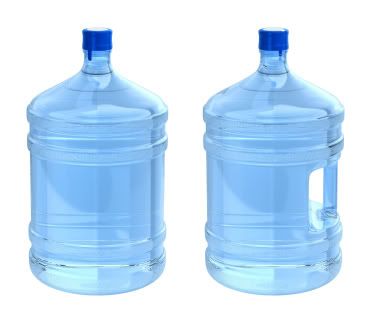 in a gym either. Simple workouts can be achieved with bottles and jugs of water filled at whatever level is right for you. Two half gallon or gallon milk or juice jugs are a good place to start. If you are stronger then move up to 21/2 to 5 gallon water jugs. Squats and lunges holding on to your water jugs is an excellent exercise. Simple straight arm lifts bending at the elbow to bring the water up to your shoulder or lifting back behind you and to the side and up are good for the arms and shoulders. Weight lifting is accessible to everyone. A gym is nice for much heavier weights, but most people do not require that. in a gym either. Simple workouts can be achieved with bottles and jugs of water filled at whatever level is right for you. Two half gallon or gallon milk or juice jugs are a good place to start. If you are stronger then move up to 21/2 to 5 gallon water jugs. Squats and lunges holding on to your water jugs is an excellent exercise. Simple straight arm lifts bending at the elbow to bring the water up to your shoulder or lifting back behind you and to the side and up are good for the arms and shoulders. Weight lifting is accessible to everyone. A gym is nice for much heavier weights, but most people do not require that.
Balance and core strength:
Last of all is building your balance and core (abdominal) muscle strength. Balance muscles work entirely differently than your other movement muscles. Balance muscles turn on to brace you against movement elsewhere in your body. These muscles hold things still and steady. They are not for creating movement, and in fact when the balance area is moving, the balance muscles turn off.
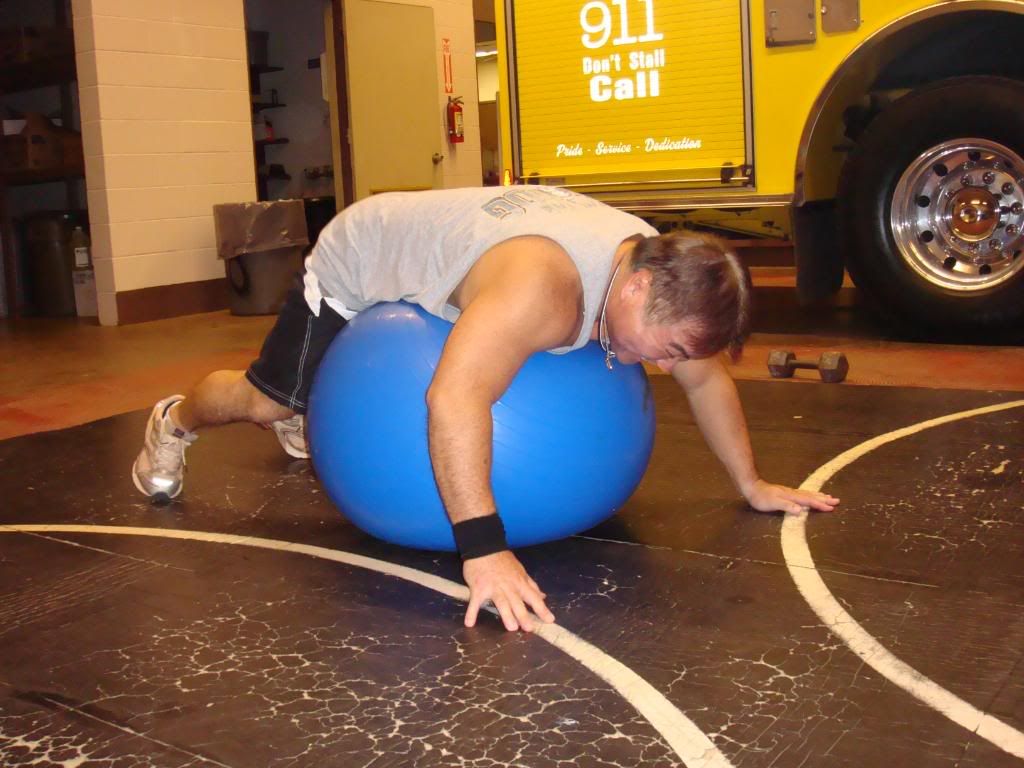
Balance muscles need to be worked several times every day. While strength is important, coordination is more important to these muscles. There are many books on working with building your core and balance muscles, but simple things you can do at home are: getting a big therapy ball and sitting on it for a half hour a couple times a day while doing other desk work or while watching TV. Practice balancing on one foot with your eyes closed several times a day. Join a Tai Chi class locally, or buy a Tai Chi DVD and use it at home. This subject is a whole newsletter in itself, but vital for keeping young. Poor balance is the number one killer of folks over 75 due to the complications of falls. one foot with your eyes closed several times a day. Join a Tai Chi class locally, or buy a Tai Chi DVD and use it at home. This subject is a whole newsletter in itself, but vital for keeping young. Poor balance is the number one killer of folks over 75 due to the complications of falls.
The big take away message of this newsletter is to engage your fitness gradually and progressively. Everyone can build fitness and fitness is probably the single biggest factor in our overall physical and mental health. Being in good shape is worth more than all the pills you can take. What I have discussed today is the closest thing to a shortcut to better health you can find. 45 minutes of cardiovascular training and 30 minutes of weight training per week is a tiny amount of time to spend for such huge results. It is the absolute minimum for maintaining your health.
Start conditioning your body at whatever level is right for you to begin with. The key is to push yourself to your maximum in order to tell your body that you want to be able to do more. The body is very conservative and will only give you more when you demand it by trying to do more. You don't need to push a lot, but you do need to push beyond your comfort zone in order to fight the perpetual tendency of the body to slow down and degenerate. Just log it into your brain that any time  you are comfortable for more than 8 hours, you are sliding downhill physically. Yes you need rest and recovery, but you need exertion as well. It is all about balance. you are comfortable for more than 8 hours, you are sliding downhill physically. Yes you need rest and recovery, but you need exertion as well. It is all about balance.
Take care of yourself.
Good Journey,
David
Several folks have asked me to put some pure erythritol in the office for baking purposes. Erythritol is a natural sugar substitute that has basically no calories or carbohydrates. It does not cause bowel distress like most other similar natural sugar replacements as it does not stay in the bowel but passes out through the kidneys instead. It is about 70% as sweet as sugar and can be used just like sugar in recipes.
Erythritol
2lbs for only $19.95
In the office now.
Announcement
I am now adding Vitamin C to the Miracle Protein Bread! A full 4 grams per loaf! That is 2-3 times the minimum recommended daily dose per slice, or equal to 2-3 oranges.
I have just finished creating the fifth new Miracle Protein Bread Enhancer. These are flavor enhancement packages for the Miracle Protein Bread basic mix. Now you can turn your Miracle Protein Bread into delicious Dark Chocolate Cake Bread, Lemon Poppy Seed Bread, Italian Garlic & Herb Bread, a Dieter's Super Fiber Bread, and now Gingerbread. The Gingerbread, Chocolate Bread and the Lemon Poppy Seed are sweetened with Dr Dave's Super Sweet Powder so they are NO SUGAR, very low Carb, high protein, and high fiber, good for you delicious treats.
The Dieter's Super Fiber enhancer increases the fiber level to 8 grams per slice! One slice with a glass of water before each meal and you will feel filled up before you even start to eat your meal. This fiber gives the Miracle Bread a look, feel, and taste of a whole grain bread.
Plus! I have increased the Magnesium content of the bread mix to promote greater ease and relaxation in your nervous system. Magnesium and potassium support the functioning of your anti-stress nervous system, the parasympathetic nerves. This promotes better digestion, greater ease in your muscles, and about a few hundred other things.
Take your Miracle Bread to new heights of eating pleasure. Enjoy! In the office now.
Experience Ellen's Life Coaching Process during her Free Health Exam
Discover your true health status
________
Ouestions - if you have questions of a health or growth nature we could discuss in this newsletter, or if you have comments or ideas about a future newsletter focus please email me at:
david@fairoakshealth.com
|