For the past 60 years medical science has been preaching the evils of
cholesterol. In that story there has
been "good" cholesterol (HDL) and "bad" 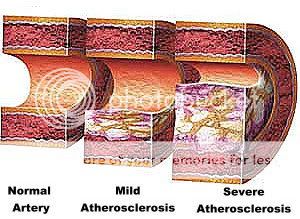 cholesterol (LDL). This theory began because of the observation
that LDL cholesterol will stick to the walls of arteries and produce
blockages. Therefore the thought was
that if you get rid of the "bad" cholesterol you would then get rid of heart
disease. This is kind of the traffic jam
theory of heart disease - the way to stop traffic jams is to get rid of the
cars. No one stopped to ask whether the
"bad" LDL cholesterol was important to the body, and why did the levels go up
causing the traffic jams?
cholesterol (LDL). This theory began because of the observation
that LDL cholesterol will stick to the walls of arteries and produce
blockages. Therefore the thought was
that if you get rid of the "bad" cholesterol you would then get rid of heart
disease. This is kind of the traffic jam
theory of heart disease - the way to stop traffic jams is to get rid of the
cars. No one stopped to ask whether the
"bad" LDL cholesterol was important to the body, and why did the levels go up
causing the traffic jams?
 The medical answer has of course been drugs to
lower cholesterol - namely the statin drugs. This is crisis thinking. It is
like ordering military air strikes to blow cars off the freeways to clear up
traffic jams. There is a place for this
kind of thinking as in immediate life and death emergencies. Medicine loves this type of thinking because
they like to save lives. It makes you
feel good to rescue someone from the edge of death. Crisis thinking does not produce health and
harmony. It produces compromised health
and loss of harmony.
The medical answer has of course been drugs to
lower cholesterol - namely the statin drugs. This is crisis thinking. It is
like ordering military air strikes to blow cars off the freeways to clear up
traffic jams. There is a place for this
kind of thinking as in immediate life and death emergencies. Medicine loves this type of thinking because
they like to save lives. It makes you
feel good to rescue someone from the edge of death. Crisis thinking does not produce health and
harmony. It produces compromised health
and loss of harmony.
A recent study form Texas A&M University is
helping to break down the crisis mentality regarding LDL cholesterol. Steve Riechman, a researcher in the Department of Health and Kinesiology, says the study reveals that LDL is not
the evil Darth Vader of health it has been made out to be and that new attitudes
need to be adopted in regards to the substance. His work, with help from
colleagues from the University of Pittsburgh, Kent State University, the Johns
Hopkins Weight Management Center and the Northern Ontario School of Medicine,
is published in the Journal of
Gerontology.
Department of Health and Kinesiology, says the study reveals that LDL is not
the evil Darth Vader of health it has been made out to be and that new attitudes
need to be adopted in regards to the substance. His work, with help from
colleagues from the University of Pittsburgh, Kent State University, the Johns
Hopkins Weight Management Center and the Northern Ontario School of Medicine,
is published in the Journal of
Gerontology.
Riechman and colleagues examined 52 adults from
ages to 60 to 69 who were in generally good health but not physically active,
and none of them were participating in a training program. The study showed
that after fairly vigorous workouts, participants who  had gained the most
muscle mass also had the highest levels of LDL (bad) cholesterol, "a very
unexpected result and one that surprised us."
had gained the most
muscle mass also had the highest levels of LDL (bad) cholesterol, "a very
unexpected result and one that surprised us."
"It shows that you do need a certain amount
of LDL to gain more muscle mass. There's no doubt you need both - the LDL and
the HDL -- and the truth is, it (cholesterol) is all good. You simply can't
remove all the 'bad' cholesterol from your body without serious problems
occurring."
Cholesterol is used by the body to form all of
your cell walls, to make your hormones, and is a key component of your brain
tissue. A person's total cholesterol
level is comprised of LDL (low-density lipoprotein) and HDL (high-density
lipoprotein) cholesterol.
"But here is where people tend to get things
wrong," Riechman says.
"LDL
serves a very useful purpose. When it goes too high,it acts as a warning sign
that something is wrong and it signals the body to these warning signs. It does
its job the way it is supposed to."
"People often say, 'I want to get rid of all
my bad (LDL) cholesterol,' but the fact is, if you did so, you would die,"
the Texas A&M professor adds. "Everyone needs a certain amount of both
LDL and HDL in their bodies. We need to change this idea of LDL always being
the evil thing - we all need it, and we need it to do its job."
 According to the American Heart Association, about
36 million American adults have high cholesterol levels. While some studies say high cholesterol is highly associated with increased
heart attacks, there are also just as many heart attacks in people with low
levels of cholesterol.
According to the American Heart Association, about
36 million American adults have high cholesterol levels. While some studies say high cholesterol is highly associated with increased
heart attacks, there are also just as many heart attacks in people with low
levels of cholesterol.
"Our tissues need cholesterol, and LDL
delivers it," he notes. "HDL, the good cholesterol, cleans up after
the repair is done. And the more LDL you have in your blood, the better you are
able to build muscle during resistance training."
Riechman says the study could be helpful in
looking at a condition called sarcopenia, which is muscle loss 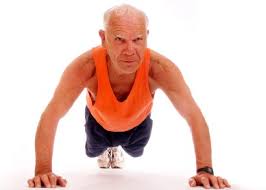 due to aging.
Previous studies show muscle is usually lost at a rate of 5 percent per decade
after the age of 40, a huge concern since muscle mass is the major determinant
of physical strength. After the age of 60, the prevalence of moderate to severe
sarcopenia is found in about 65 percent of all men and about 30 percent of all
women, and it accounts for more than $18 billion of health care costs in the
United States.
due to aging.
Previous studies show muscle is usually lost at a rate of 5 percent per decade
after the age of 40, a huge concern since muscle mass is the major determinant
of physical strength. After the age of 60, the prevalence of moderate to severe
sarcopenia is found in about 65 percent of all men and about 30 percent of all
women, and it accounts for more than $18 billion of health care costs in the
United States.
 "The bottom line is that LDL - the bad
cholesterol - serves as a reminder that something is wrong and we need to find
out what it is," Riechman says.
"The bottom line is that LDL - the bad
cholesterol - serves as a reminder that something is wrong and we need to find
out what it is," Riechman says.
"It gives us warning signs. Is smoking the
problem, is it diet, is it lack of exercise that a person's cholesterol is too
high? It plays a very useful role, does the job it was intended to do, and we
need to back off by always calling it 'bad' cholesterol because it is not
totally bad."



 This is a much nicer and quieter facility. We got right in, but they wanted to run labs and get her into a bed for what I thought was only a 2 minute flush procedure.