|
This newsletter is about making Ghee
December 19, 2010
Making Ghee
Hi ,
Happy Holidays Everyone
Many of you have asked me about the ingredient Ghee in many of my recipes. Ghee is simply clarified butter that has had all the water boiled out of it. Why do I use it in my recipes? The number one reason is that I can not use regular butter because of the milk protein casein that is in it. Casein looks just like gluten to the body, so those of us that are gluten intolerant also need to stay away from casein. Bummer, I know. That means no dairy products like cheese, yogurt, and my personal favorite - butter.
Ahh, but the fates gave us an answer - remove the casein from the butter. This happens when we clarify the butter. When we melt the butter the milk protein solids either float to the top or sink to the bottom, leaving the butter oil in the middle. By skimming off all the milk solids from the top of a kettle full of melted butter then carefully ladling out the oil, we can get a nice butter/oil without the offending milk proteins.
Ghee has been used in India and Pakistan for thousands of years, both in cooking and in religious rituals. The main benefit to ghee for these cultures is that by clarifying the butter and boiling off the water, the butter can be kept for long periods without refrigeration. Simply keep it away from air that can oxidize it and it will keep for a long time, much like we are able to keep lard.
Ghee is highly nutritious as a source of fat soluble vitamins and dense energy. Studies have found that it mildly reduces cholesterol levels. It is also an ideal fat for frying as its smoke point is 485 degrees - much higher than vegetable oils.
Being an essentially thrifty person (Scottish blood?) I make my own Ghee as buying ghee in this country is quite expensive. It is a very simple process that takes 45 minutes to an hour for a good sized batch. I used to do small batches of just a couple pounds of butter, but the same amount of work is involved with a small batch as a large batch so now I save time and do up 12 pounds at a time.
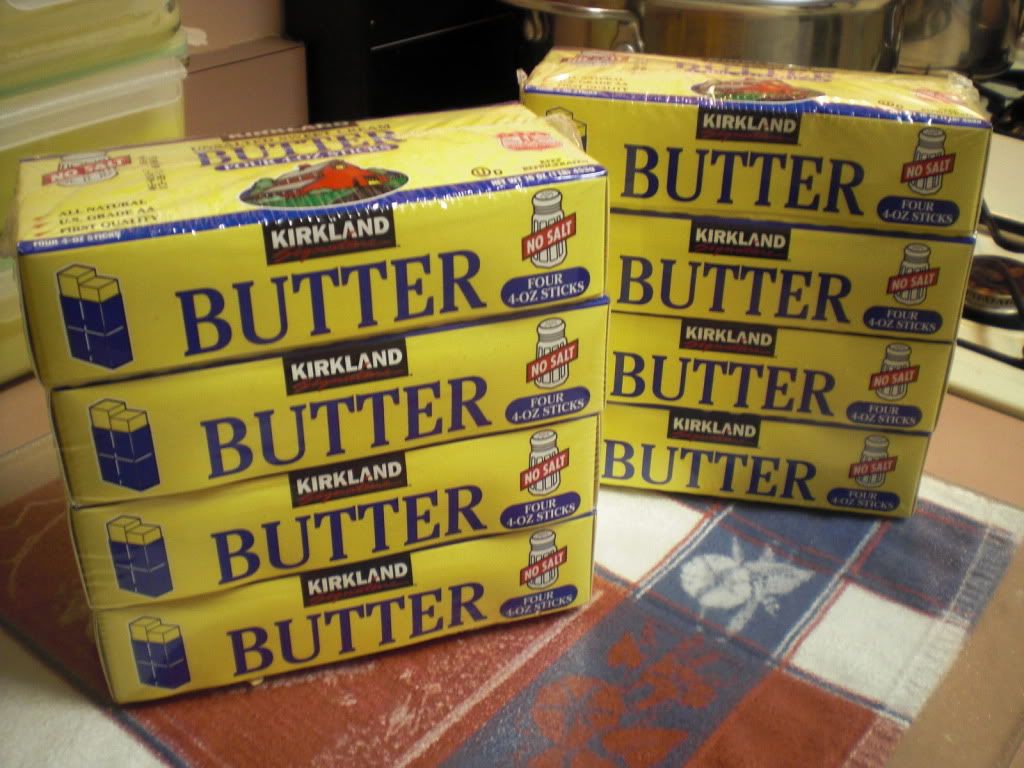
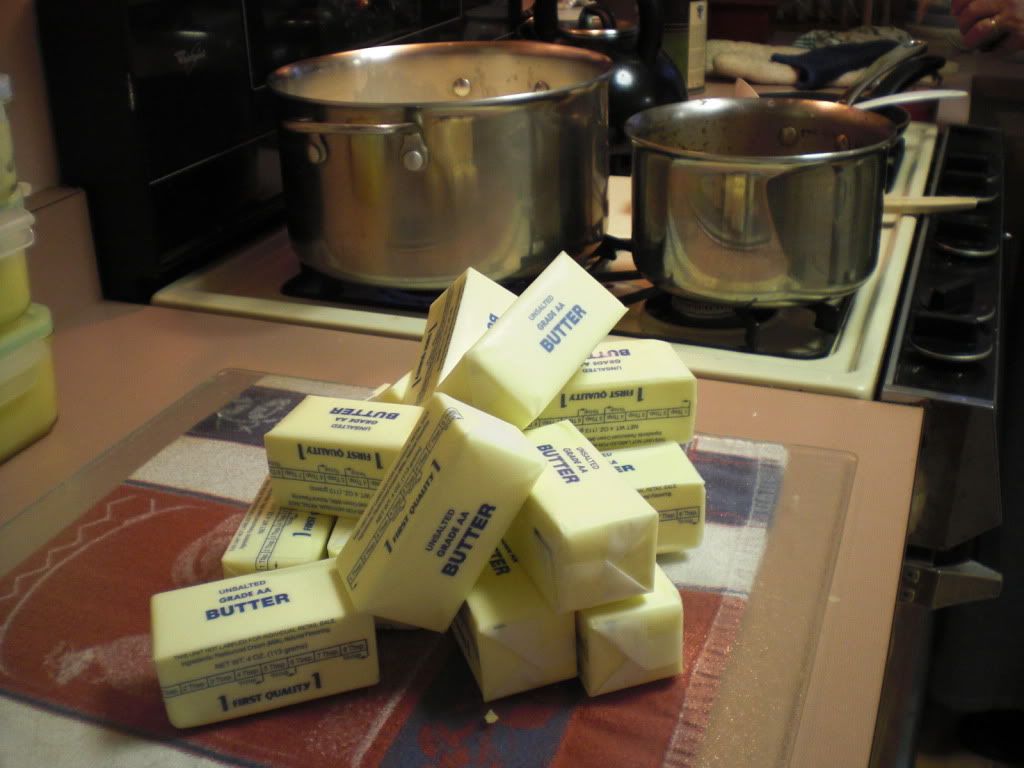
First I start out with unsalted butter. If you can find butter in bulk or 1 pound blocks the first step is much less tedious. Here I unwrapped 48 cubes of butter (12 pounds). 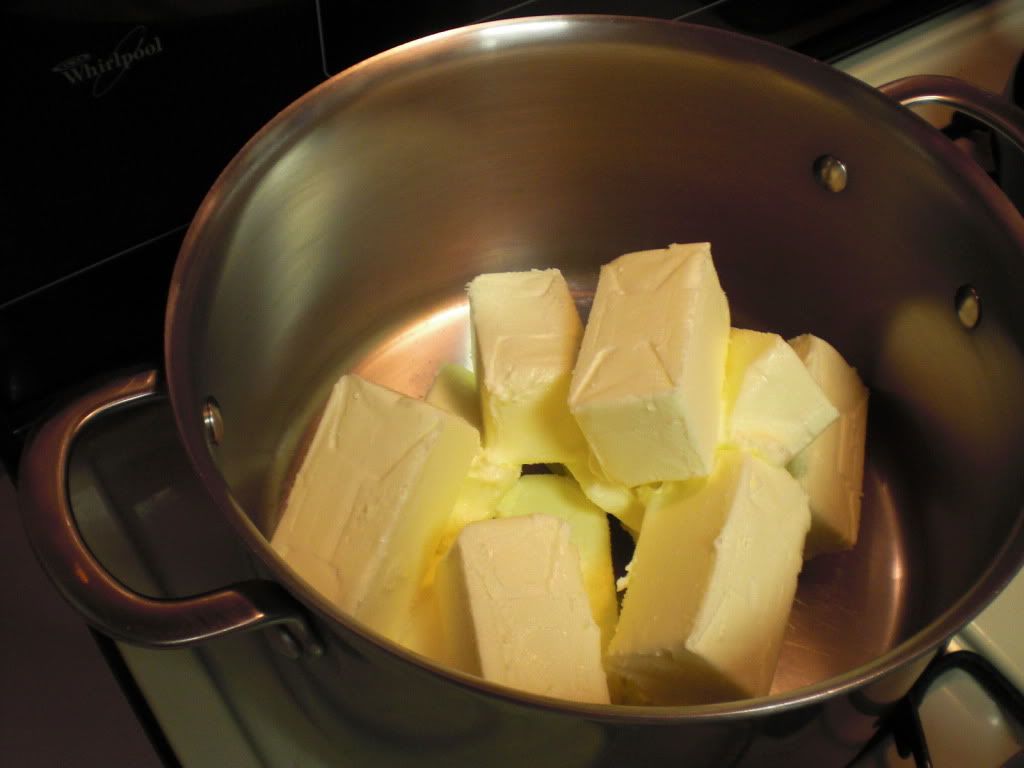
All this butter goes onto my big stainless steel kettle over a medium flame to melt. As the butter melts a white foam will rise to the top which I ladle off carefully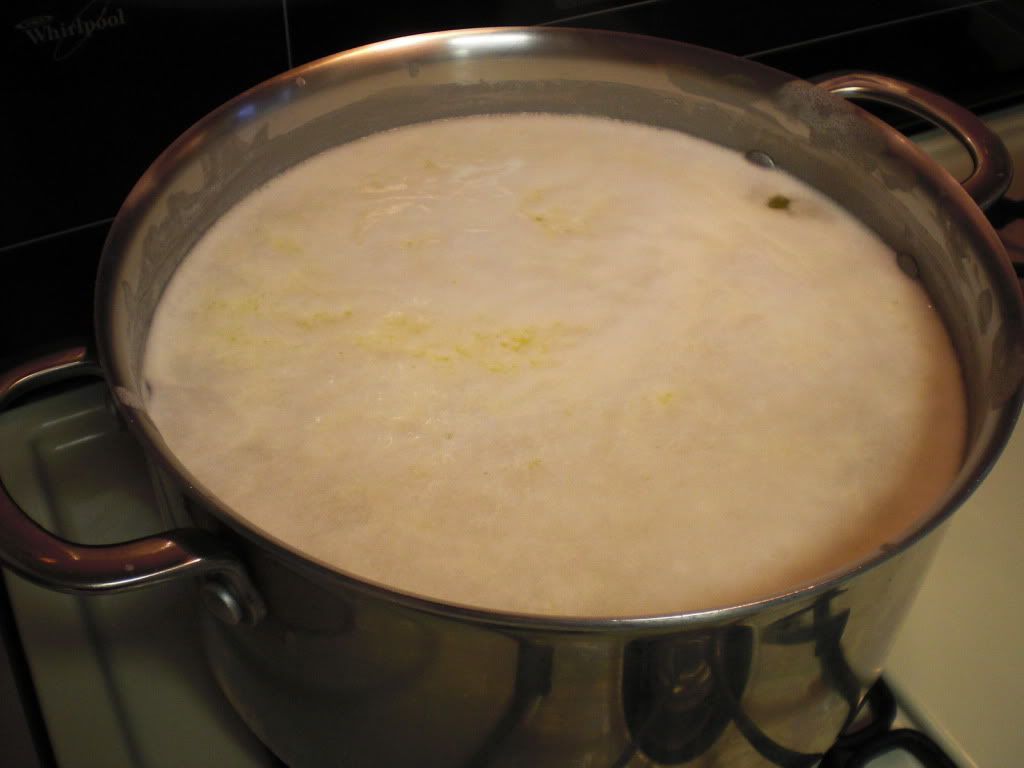 trying not to discard any of the butter oil underneath it. By skimming gently I can pull off the foam as it forms. trying not to discard any of the butter oil underneath it. By skimming gently I can pull off the foam as it forms.
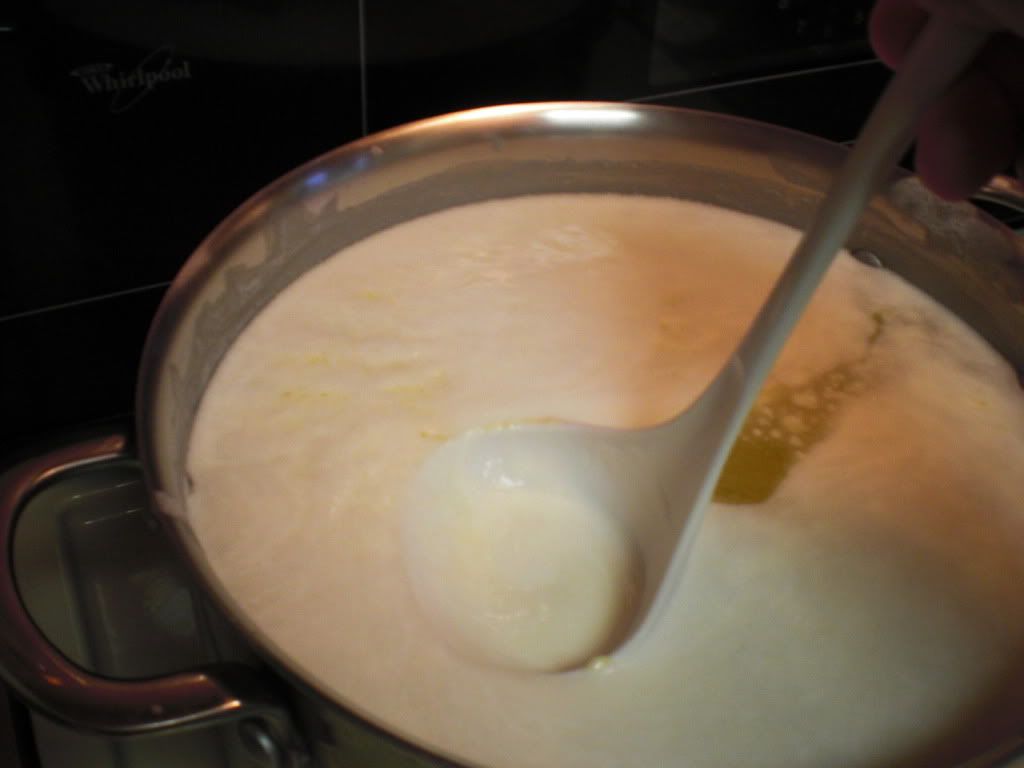
Once all the cubes of butter melt, the butter will begin to boil. This is because there is a lot of water in the butter. We want to boil all this water out of the oil because it is in the water that bacter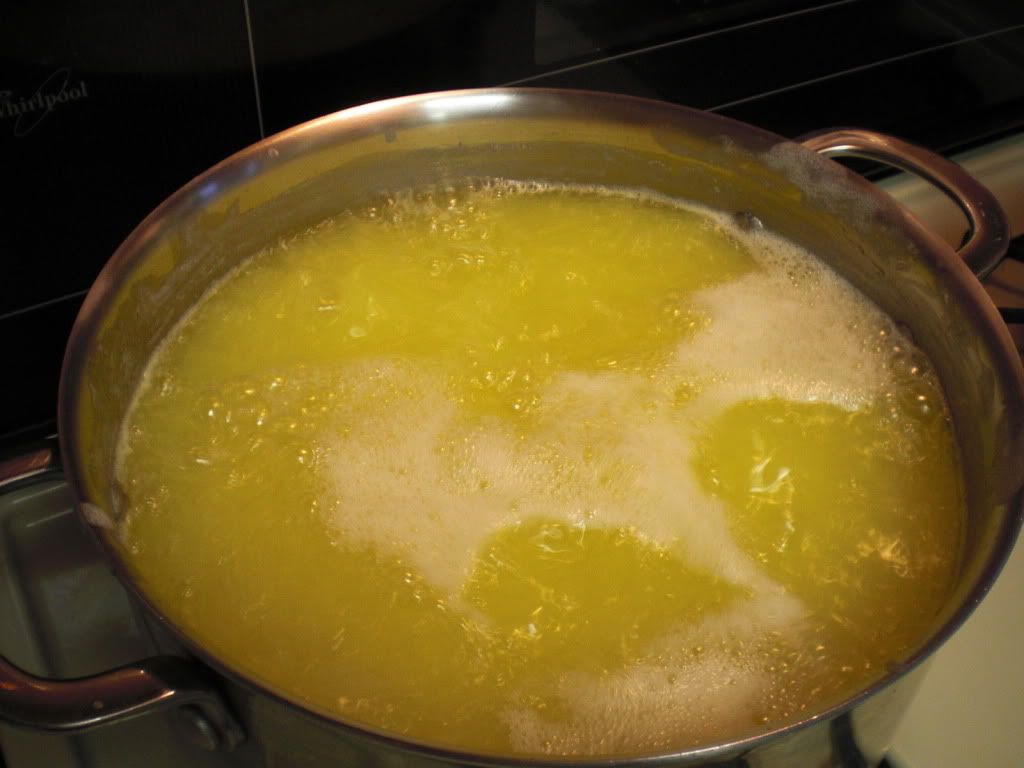 ia and mold can grow. The trick to making ghee is to b
oil the butter until all the water is gone and no longer. This may take anywhere from 15 minutes to a half hour. Just keep a casual eye on the boiling ghee and watch for the level of boiling to suddenly slow down. ia and mold can grow. The trick to making ghee is to b
oil the butter until all the water is gone and no longer. This may take anywhere from 15 minutes to a half hour. Just keep a casual eye on the boiling ghee and watch for the level of boiling to suddenly slow down. 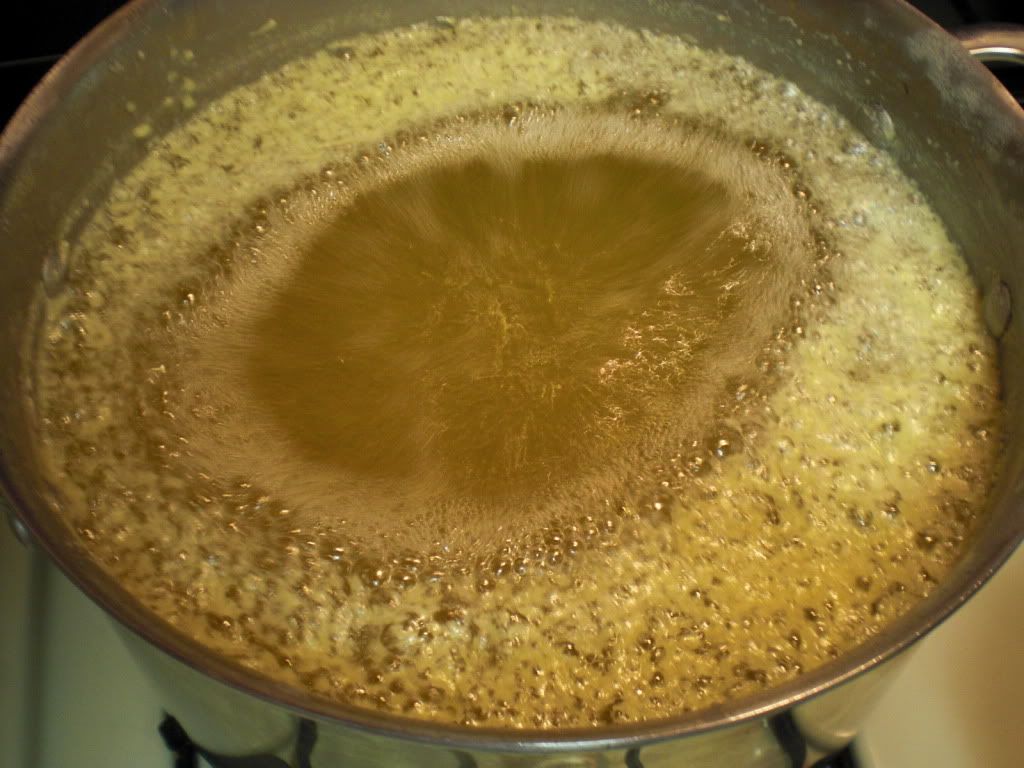 Usually by this time another layer of foam has formed, but it will look crustier than before. Skim out all this foam while watching the color of the butter oil. As the last bit of water boils off, the butter oil will start to toast and get a nice light brown color to it. Usually by this time another layer of foam has formed, but it will look crustier than before. Skim out all this foam while watching the color of the butter oil. As the last bit of water boils off, the butter oil will start to toast and get a nice light brown color to it. 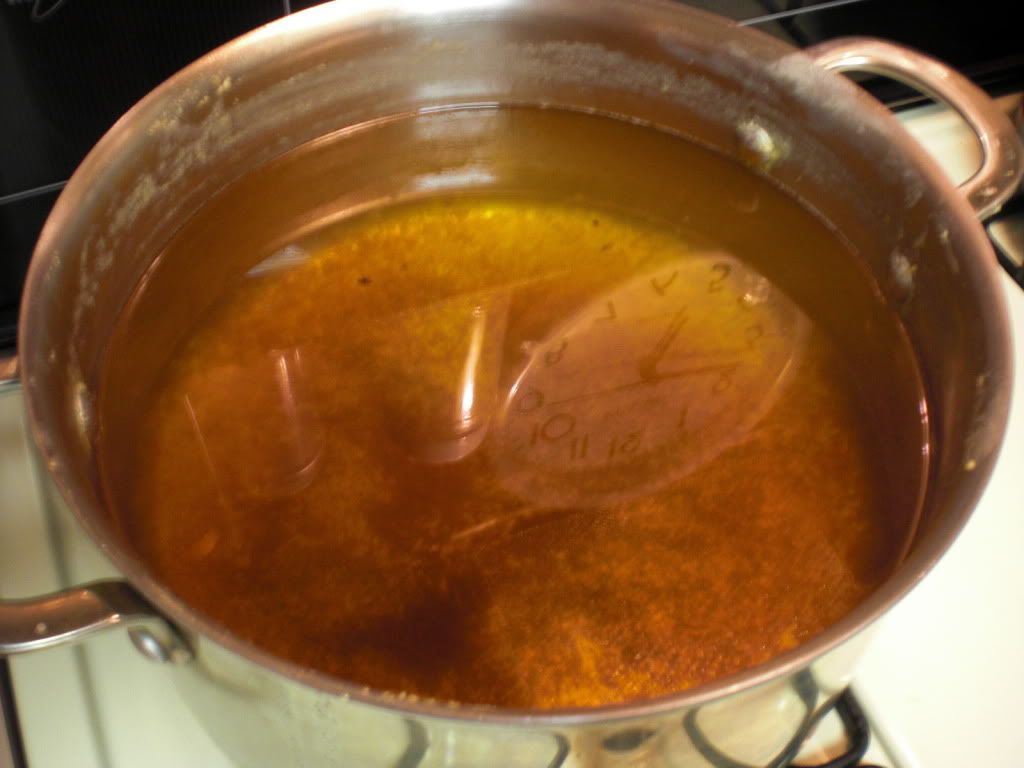 When you see this immediately turn off the heat. All boiling should stop making it much easier to skim off the last of the butter solids. At this point I just let the oil sit for a couple of hours to cool down so I don't burn myself transferring it into jars. When you see this immediately turn off the heat. All boiling should stop making it much easier to skim off the last of the butter solids. At this point I just let the oil sit for a couple of hours to cool down so I don't burn myself transferring it into jars.
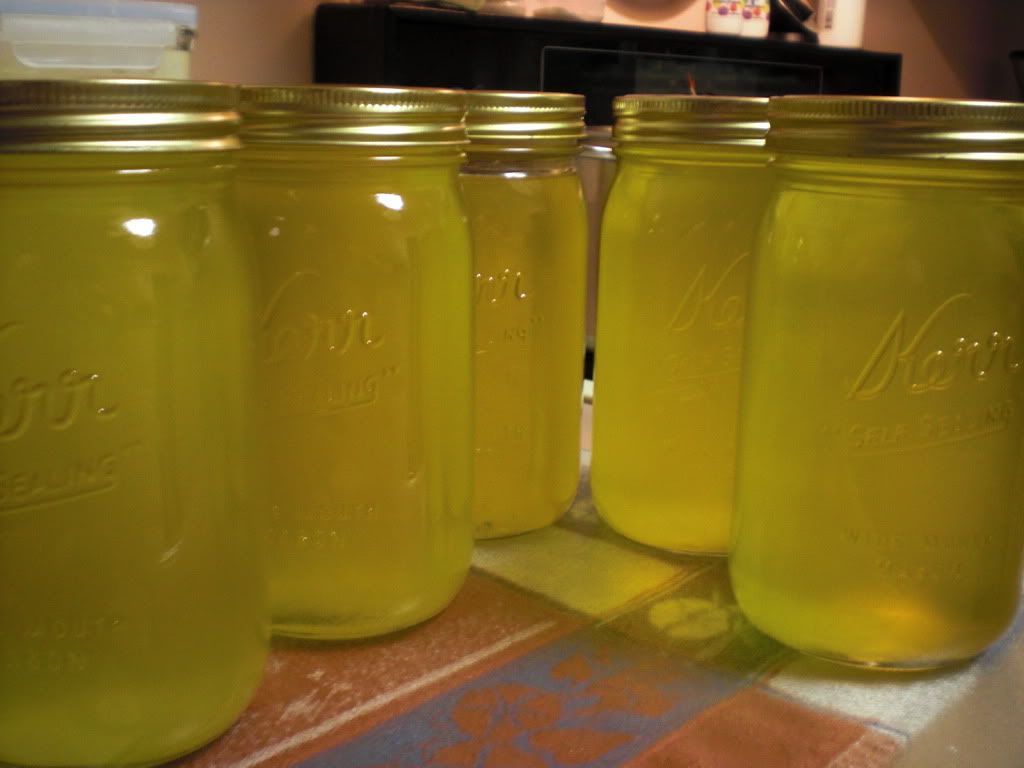 Once it has cooled, I simply ladle it gently into mason jars to within 1/4 inch of the top. I say gently because there are more milk solids floating on the bottom of the pan. If you timed the heat just right, the solids will be like glue in the bottom of the pan and not disturb easily. Close up your jars and let them cool the rest of the way down. Within a few hours the oil will likely solidify and look like butter again. In this form it can be stored on the shelf for Once it has cooled, I simply ladle it gently into mason jars to within 1/4 inch of the top. I say gently because there are more milk solids floating on the bottom of the pan. If you timed the heat just right, the solids will be like glue in the bottom of the pan and not disturb easily. Close up your jars and let them cool the rest of the way down. Within a few hours the oil will likely solidify and look like butter again. In this form it can be stored on the shelf for 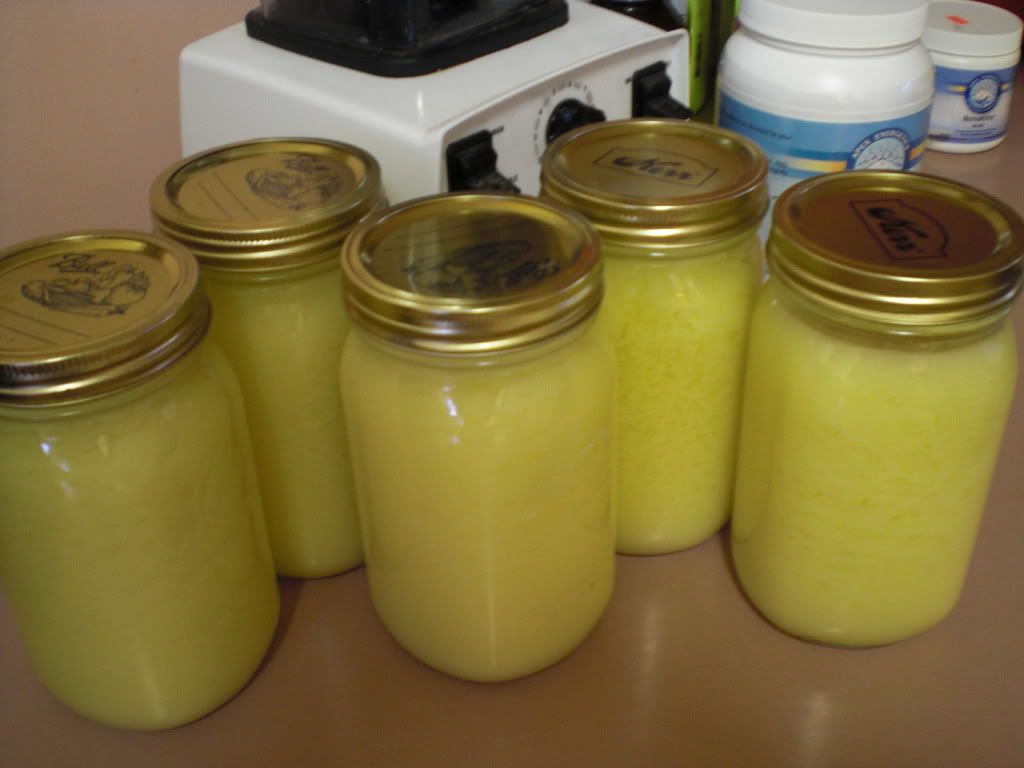 many months. It is great for cooking, adding to soups, putting on vegetables, using as you would any other oil in frying, and can even be used as a butter substitute on my Protein Bread. It will be unsalted and no longer have any of the milk sugars or solids so the flavor will be bland. However I have been experimenting with adding back in tiny bits of erythritol sweetener and powdered sea salt to bring back the usual butter flavor. many months. It is great for cooking, adding to soups, putting on vegetables, using as you would any other oil in frying, and can even be used as a butter substitute on my Protein Bread. It will be unsalted and no longer have any of the milk sugars or solids so the flavor will be bland. However I have been experimenting with adding back in tiny bits of erythritol sweetener and powdered sea salt to bring back the usual butter flavor.
Even though I have been chasing down all these ways around the restrictions of a gluten free life for myself, it is my hope that this information will also be useful for the many other folks that need to observe these restrictions. One third of you have the genes for gluten sensitivity. Most of you have no idea if you are part of that one third. The science for testing this huge problem is just now being developed. Gluten sensitivity triggers your immune system to attack your own body. One exposure to gluten can trigger a reaction lasting for up to eight months, so you can't just try getting off bread for a week and see if you feel better. Getting fully clear of a gluten reaction can take a couple years...and exposure is everywhere. That is why I am looking so hard for alternatives. Once your system has switched on an intolerance, the current belief is that it is forever. I hope they find a way to switch it off some day, but until then I choose to enjoy life by creatively finding ways to recreate my favorite foods without the negatives of gluten.
Have a great Holiday,
Good Journey,
David
Announcement
Now you can have your cake and eat it too!
I have just finished creating three new Miracle Protein Bread Enhancers. These are flavor enhancement packages for the Miracle Protein Bread basic mix. Now you can turn your Miracle Protein Bread into delicious Dark Chocolate Cake Bread, Lemon Poppy Seed Bread, and a Dieter's Super Fiber Bread. The Chocolate Bread and the Lemon Poppy Seed are sweetened with Dr Dave's Super Sweet Powder so they are NO SUGAR, very low Carb, high protein, and high fiber, good for you delicious treats.
The Dieter's Super Fiber enhancer increases the fiber level to 8 grams per slice! One slice with a glass of water before each meal and you will feel filled up before you even start to eat your meal. This fiber gives the Miracle Bread a look, feel, and taste of a whole grain bread.
Plus! I have increased the Magnesium content of the bread mix to promote greater ease and relaxation in your nervous system. Magnesium and potassium support the functioning of your anti-stress nervous system, the parasympathetic nerves. This promotes better digestion, greater ease in your muscles, and about a few hundred other things.
Take your Miracle Bread to new heights of eating pleasure. Enjoy! In the office now.
Experience Ellen's Life Coaching Process during her Free Health Exam
Discover your true health status
________
Ouestions - if you have questions of a health or growth nature we could discuss in this newsletter, or if you have comments or ideas about a future newsletter focus please email me at:
david@fairoakshealth.com
|