|
This newsletter is about a home made anti-aging face cream
November 17, 2010
Anti-Aging Face Cream
Hi ,
Last week my sweetheart asked me to look up some ingredients in an expensive face cream that was supposed to make you look miraculously  younger. My first thought was "How toxic are these ingredients?" My online resource for checking out such things is the Environmental Working Group's cosmetic database. younger. My first thought was "How toxic are these ingredients?" My online resource for checking out such things is the Environmental Working Group's cosmetic database.
The EWG is a consumer watchdog group that provides information about all the toxic stuff in our environment.
Since anything that goes on our skin is likely to also soak right into our body, you don't want to use skin care products that are poisonous. That may seem obvious, yet in the pursuit of youth we will try about anything. Well I looked up the top five ingredients in the cream she was considering and discovered that drinking insecticide was safer. The only ingredient of the five that had promise of facial benefit that was not toxic was L-ascorbic acid, know to most of us as vitamin C.

So I started researching vitamin C based facial products and learned a lot. Vitamin C works quite well for about 60% of women, but it is very unstable. Vitamin C is such a good antioxidant that once it is exposed to the air it begins to oxidize and become worthless. The info I dug up says that most products become worthless before you get through half the jar or tube. Often the product is bad before you even open it.
A little more research uncovered what I suspected - it is very easy to make your own vitamin C skin treatment at home in tiny batches that are fresh for mere pennies (compared to the $70 price tag on a couple ounces of the toxic product.)
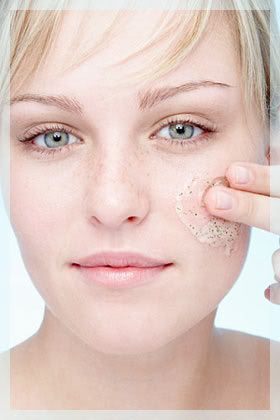
The basic recipe is to mix ¼ teaspoon of L-ascorbic acid into 1 teaspoon of distilled water until fully dissolved. You then mixed this solution into some cold cream and use it on your face. Any extra you put into an opaque airtight container in the fridge and use it up within a couple days. This keeps the face cream fresh and functional. Some sites suggested testing it first on your arm to make sure you don't have any reactions to vitamin C on the skin.
So, naturally I trotted (drove) out to the health food store (Elloitt's in this case) and bought 8 oz of powdered ascorbic acid (be sure not to get the buffered calcium ascorbate - it won't work.) Getting it from their bulk bin kept the cost down to only $9 for enough to last at least 6 months I would guess. Now that is a lot cheaper than the fancy stuff.
Today I was thinking why not really amp up the power of the face cream by using some real miracle medicine - glutathione and superoxide dismutase. These are your body's natural mechanisms for fighting aging. Apex products created a glutathione cream called Oxicell
for treating systemic cellular aging and fighting inflammation in the body. I recalled in a seminar I was at, that the fellow that formulated this product mentioned that several top cosmetic companies had approached them trying to buy their patent on their cream to make into an anti-aging face cream. Apex said no because they were interested in the greater holistic medical applications for the product, but casually mentioned that you could use it on your face for anti-aging. treating systemic cellular aging and fighting inflammation in the body. I recalled in a seminar I was at, that the fellow that formulated this product mentioned that several top cosmetic companies had approached them trying to buy their patent on their cream to make into an anti-aging face cream. Apex said no because they were interested in the greater holistic medical applications for the product, but casually mentioned that you could use it on your face for anti-aging.
So today I thought why just mix the vitamin C into ordinary cold cream when you could mix it into Oxicell? Now there would be a really smashing anti-aging product! Of course I would have to charge $120 for 2 ounces because this would be so much better than the mere $70 cream, but there would still be the problem of it going bad before you even got half  way through the jar. Hummm, I guess you ladies (and a few men that want to stay looking younger), will just have to go to the work of mixing this up for yourselves to keep it fresh. way through the jar. Hummm, I guess you ladies (and a few men that want to stay looking younger), will just have to go to the work of mixing this up for yourselves to keep it fresh.
So what all is in Oxicell I hear some of you saying? Here is what the label says:
ACTIVE INGREDIENTS
Glutathione (reduced), Superoxide Dismutase (S.O.D), Tocopheryl Acetate (Vit. E), Niacin (Vit. B3), Co-Q 10, Riboflavin (Vit. B2), Alpha Lipoic Acid, S-Adenosyl-Methionine (SAMe), Bayberry, Bitter Kola, Blue Gum-tree, Ashwagandha root, NADH, FADH2, ATP, Zinc, Sodium Chloride, Astragalus (root), Juniper Berries, Brazilian Cress, Arnica, Olive, Sweet Chestnut, Agrimony, Willow, Aspen, Gorse, Holly, Fluoric Acid, Copper, Phosphorus, Manganese, Selenium.
My product sheets on Oxicell come with 4 pages of scientific literature and studies backing up these ingredients. This is pretty powerful stuff.
I would make up the teaspoon of the distilled water and vitamin C solution and then add a teaspoon of Oxicell and mix them together to make a serum. After testing on an arm first for a day, I would use ¼ teaspoon on the face once or twice a day. And yes, we usually have Oxicell available in the office. Be sure to put any  unused serum into an opaque small container that can be sealed air tight and store it in the fridge. Within a week the vitamin C will be useless, but the Oxicell will still be good and I would use it on its own. unused serum into an opaque small container that can be sealed air tight and store it in the fridge. Within a week the vitamin C will be useless, but the Oxicell will still be good and I would use it on its own.
This is just a helpful beauty tip for all the beauties in my practice.
Good Journey,
David
Experience Ellen's Life Coaching Process during her Free Health Exam
Discover your true health status
________
Ouestions - if you have questions of a health or growth nature we could discuss in this newsletter, or if you have comments or ideas about a future newsletter focus please email me at:
david@fairoakshealth.com
|