|
March 31, 2010
Homegrown Vegetables
Hi ,
Homegrown, doesn't that sound wholesome and full of goodness? I have been an advocate of making use of the local farmer's markets for many years. Getting your food from the actual farmers who grow it brings you into the whole cycle of life on a hands-on level. Well let's take that up a notch! How about growing your own food? Now we are talking hands-on. A little dirt, a little sweat, a little frustration, and a lot of personal satisfaction - growing your own food opens up a doorway of gratitude and appreciation that just can not be gotten from a supermarket.
A few weeks ago I borrowed a book from my next-door neighbor called Square Foot Gardening. I liked the concept of high density and mixed variety planting that promised high yields from a very small plot of vegetables. Even better was the caption that stated "without any weeding!" Now that was a selling key for me. I grew up living out of our family garden every summer. Weeding was a way of life as most of our food supply came from our garden during summer vacation. (I hate weeding.)
There is no substitute for the taste of a fresh tomato still warm from the sun because you just picked it. I hesitate to call the things they sell in the store tomatoes - they sure don't taste like tomatoes. In fact I am hard pressed to even say they have a taste at all. Nutritionally, growing your own can not be beat. The moment you pick a plant it begins to lose its nutritional value. Every hour shows a significant loss of such nutrients as vitamin C, so picking and eating your food right away is the best.
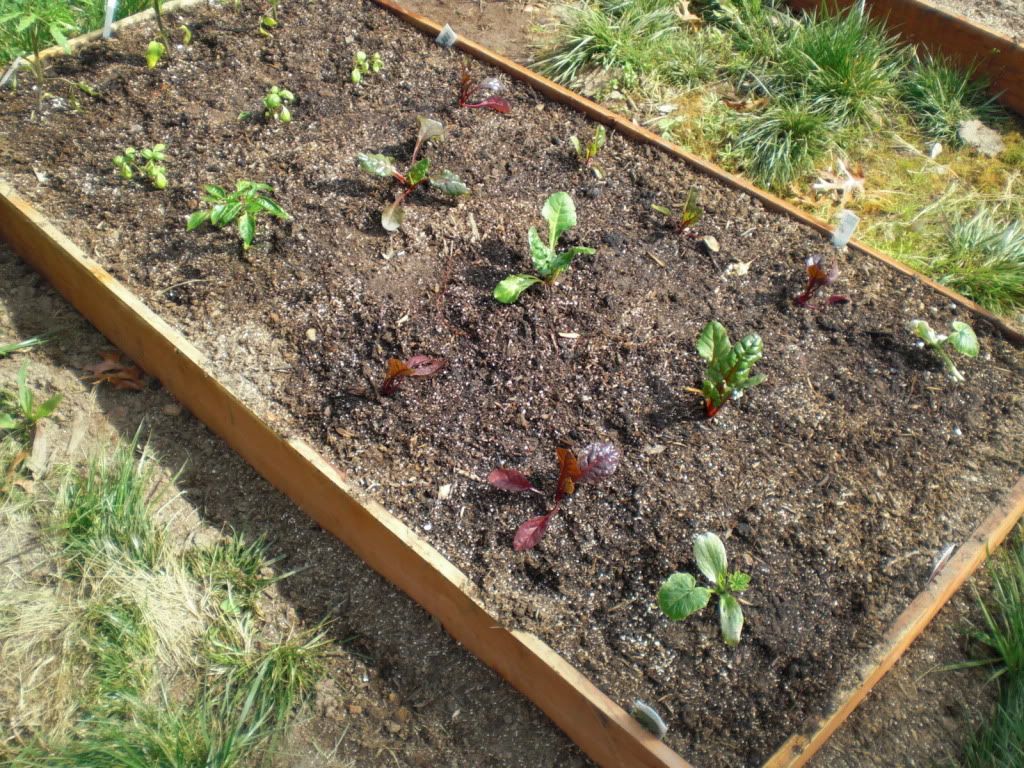
The process presented in this book is very easy. All you need is a spot of space as little as four foot square (4X4) that gets plenty of sun. The idea is to create a big planter box that is divided into 1 square foot sections and filling it up with a super light yet water retaining soil mix. It doesn't even have to be on the ground. It could be put on a cement patio, a deck, whatever. I fortunately have a backyard that works perfectly for a couple planter boxes.
In my case I decided to go the inexpensive route for the box and just used 6-foot redwood fence boards that cost me all of $1.69 apiece. To keep things really simple I just cut one of the boards in half and screwed the other two boards to the two halves to create a rectangular 3x6 planter. The real expense was in the soil -1/3 peat moss, 1/3 vermiculite, and 1/3 organic compost (meaning steer manure, chicken manure, and similar stuff.) I mixed these together and put it in the boxes and I was ready to plant. I started with baby tomato starts, rainbow chard starts, red peppers, eggplant, cucumbers, and summer squash. Next I will be planting seeds like carrot, fennel, beet, and what not.
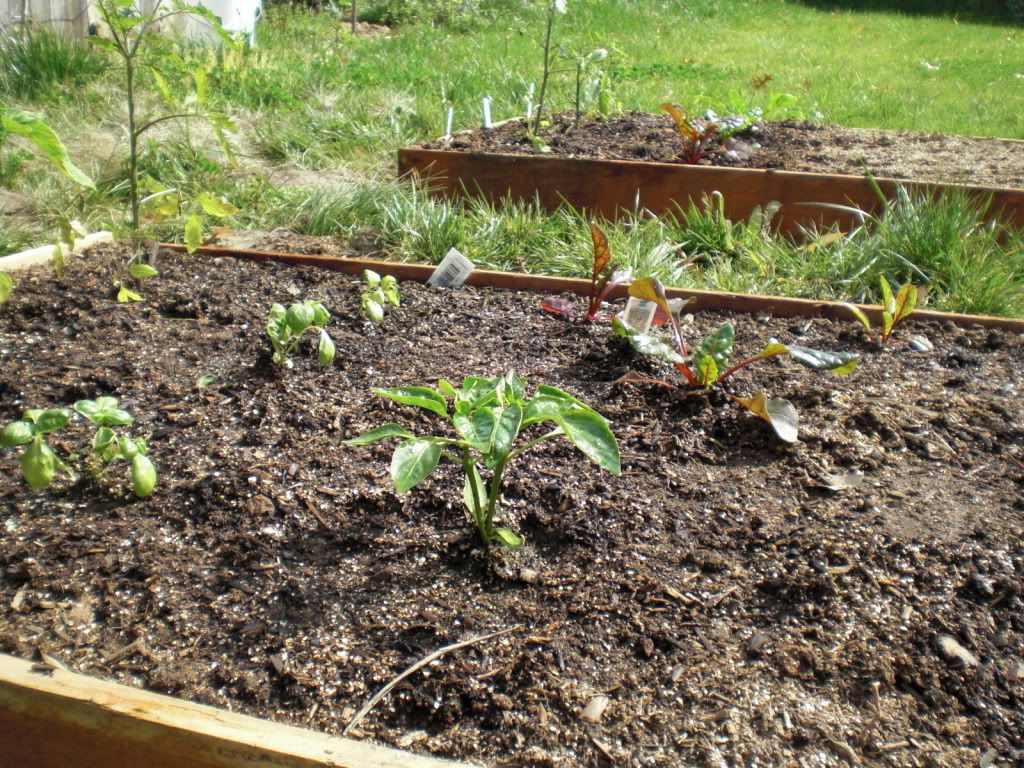 So it is not too late to start your own organic farm on a tiny scale. The rewards you gain just by participating in growing your own food are deep and profound. The nutrition can't be beat, and the connection you gain with life is precious. This system looks to be incredibly simple with low maintenance and huge results. Every age can do this from kids to seniors. Learn more about this method at
http://en.wikipedia.org/wiki/Square_foot_gardening
or www.squarefootgardening.com
Good Journey,
David
Heartflow Guest Article:
The Hidden Pain of Judgment
by Ellen Flowers
What makes judgment so hurtful? Yes, judgment separates us from what or who we are judging and separation is hurtful; but there is another deeper reason for the pain of judgment that most of us are not aware of it.
Lets start with a basic principle of interaction: What we react to in others, is an unrecognized reflection of our self. In other words, if I am delighted with something, it is a reflection of me and if I am in judgment of something it is again a reflection of me. Another way of stating this principle is:
When we point our finger in judgment at someone or something, there are three fingers pointing back at us...
(Sound familiar?)
When we encounter a situation that calls up our feelings of judgment, we are feeling offended, hurt or outraged by something the other person has done. Our feelings come from our hidden identification with this person's failed attempt to get his/her needs met in a way that works for all involved. That person did not have the skills to "get what they wanted and stay connected." The result is painful separation.
Example: I needed attention and connection but I believed that I was "unlikable." I found that I could get attention, by presenting to the world that I was "not OK". It is a natural human response, to pay attention to a cry for help. If there was a genuine solvable problem, I would have created a positive and honest exchange where both parties benefited from the interaction. They would be giving something and I would be receiving something.
The method I was using to get the attention I needed was not honest or something that created a positive connection. My attempts failed. So, when a person presents to me a continual series of "not OK" experiences, situations, or circumstances that can not be resolved, they are reflecting my pattern to me. I know they are failing because I failed in the same way. My reaction comes from below my level of awareness. I feel the pain of my failure and use judgment to push away the pain that they are reflecting to me.
Ellen Flowers 2010 (916) 966-4714
Experience Ellen's Life Coaching Process during her Free Health Exam
Discover your true health status
________
Trim Challenge
I have been following my Green Fast protocol each Monday, Wednesday, and Friday every week in March. I like it! It is easy to do and yet powerful. This is an achievable system cleanse for almost everyone.
I have dropped 14 pounds, cleaned out my liver, and colon, reduced my blood fats, and rebalanced my sugar all in one process. I would say that it is like magic except that it isn't magic, just normal physiology used in a unique way... Intermittent fasting.
Intermittent fasting keeps your body's metabolism up to normal. This is important if you want to live a normal lifestyle, work, and have the energy to do all the things you normally do (except eat junk food).
By staying in the Low Carb (or fasting/ketosis) energy state you always have a nice even yet abundant level of energy available to use. Even nicer, since your energy is coming from fats you have either eaten or stored, there is plenty available so you never experience the energy lows that happen when you burn sugar for energy. Your body only stores a very temporary supply of sugar for energy, but it can store months and months worth of energy in the form of fat.
So what does that mean? It means you don't get hungry! And since I am using piles of steamed vegetables and lots of high fiber Flax and Almond meal "breads" I even feel full in the tummy and don't have any of the bowel congestion issues that folks on most Low-Carb diets experience. My goal was to really use a lot of fiber as part of the liver cleansing process.
My goal for April is to shift focus to building better muscle tone and mass. This will give my body time to adjust to my new weight while increasing the energy burning muscle mass in my body in preparation for another month like this last March. My sense is that alternating months of building with months of cleansing/weight loss will produce the results I am looking for.
David
Ouestions - if you have questions of a health or growth nature we could discuss in this newsletter, or if you have comments or ideas about a future newsletter focus please email me at:
david@fairoakshealth.com
|